A federally approved car seat is not a government-tested product with a seal from Washington. In the United States, child-restraint manufacturers certify that their seats meet Federal Motor Vehicle Safety Standard 213, commonly called FMVSS 213. That distinction matters when a parent is comparing a $60 infant carrier with a $400 rotating model, or deciding whether a damaged seat should be replaced after a collision.
Here's what we know — and here's what we don't. Federal rules establish performance requirements, labeling, harness systems, crash protection, and installation information. They do not guarantee that every seat fits every vehicle, every child, or every family routine. A compliant seat can still be installed incorrectly, used past its expiration date, or recalled for a manufacturing defect.
What federally approved car seat actually means
The phrase federally approved car seat is consumer shorthand, not a formal government certification label. NHTSA does not pre-approve individual seats before they reach store shelves. Instead, manufacturers are responsible for certifying that their products comply with applicable federal standards, including FMVSS 213. Federal regulators can investigate, test products, and require recalls when a seat fails to meet requirements.
Look for the manufacturer name, model number, date of manufacture, expiration information, and a statement that the restraint conforms to all applicable federal motor vehicle safety standards. That label is more useful than vague packaging language such as “maximum protection” or “crash tested,” which can sound impressive without telling you how the product fits your vehicle.
The seat should also include clear instructions for both the harness and the vehicle installation method. Missing labels or a manual that does not match the model are reasons to contact the manufacturer before using the restraint.
How to choose the right seat for the vehicle and child
Start with the child’s height, weight, age, and developmental stage. Rear-facing infant and convertible seats are designed for smaller children, while forward-facing seats use an internal harness. A booster positions the vehicle’s lap and shoulder belt correctly after a child has outgrown the harness. The exact transition depends on the seat’s limits and the child’s fit, not simply a birthday on the calendar.
Fit is the practical test. The base should sit firmly on the vehicle seat without excessive side-to-side or front-to-back movement. The harness should lie flat, pass through the correct slots, and tighten so you cannot pinch slack at the shoulder. For a booster, the lap belt needs to rest low across the upper thighs, while the shoulder belt should cross the chest and shoulder rather than the neck.
Vehicle geometry complicates the purchase. A wide rotating seat may work well in a three-row SUV but crowd adjacent passengers in a compact sedan. A seat with a load leg or anti-rebound panel can require additional clearance. Read both the child-restraint manual and the vehicle owner’s manual before buying accessories or changing the installation method.
Installation mistakes are the bigger story
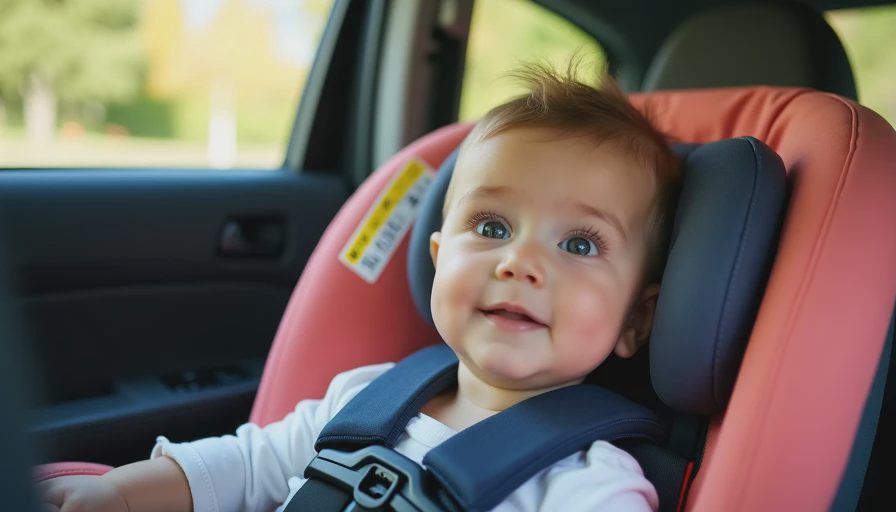
A federally approved car seat cannot compensate for loose installation. The lower anchors are not automatically safer than a seat belt; either method can be appropriate when used according to the manuals. Do not use both systems together unless the manufacturer specifically permits it. Doing so can create an installation that feels secure but has not been tested in that configuration.
Place the seat in an approved seating position, route the belt or lower-anchor connectors exactly as shown, and remove slack near the locking mechanism. Push down on the seat while tightening, then test movement at the belt path. Many child passenger safety technicians use a one-inch movement guideline, but the manufacturer’s instructions control. The seat should not shift more than that at the relevant belt path.
Check the recline indicator, especially on rear-facing seats. An incorrect angle can affect the child’s head position and the way the restraint performs. Never add aftermarket padding, head supports, strap covers, or toys unless the manufacturer supplied or approved them. Those products can alter harness fit or introduce materials that were not part of the original testing.
Recalls, expiration dates, and used-seat risks
Search the model number and manufacturer through NHTSA’s recall database before installation and periodically afterward. Registration cards and manufacturer alerts are useful because recalls can involve harness buckles, labels, padding, bases, or instructions. A recall does not always mean immediate disposal; the notice normally explains the repair, replacement, or temporary safety step.
Expiration dates are not a federal universal number. Manufacturers set service-life limits because plastics, foam, labels, and hardware age, while instructions and replacement parts can become unavailable. A used seat with no readable model number, no date label, a missing manual, or unknown crash history is a poor bargain even if the cover looks clean.
After a moderate or severe crash, replace the seat unless the manufacturer explicitly states that it can be reused after the type of collision involved. Some manufacturers recommend replacement after any crash. Insurance coverage for the replacement depends on the policy, the claim facts, and the insurer’s handling of child-restraint damage, so keep photographs, the incident report, and the purchase receipt.
What auto insurance has to do with car seats
A child restraint is personal property inside the vehicle, but coverage is not identical across policies. Collision coverage generally addresses damage to the insured vehicle from a crash, subject to the deductible. Personal property coverage, medical payments coverage, or another policy provision could become relevant to a damaged car seat, depending on the circumstances and policy language. Liability coverage can also enter the picture when another driver is legally responsible.
Do not assume a seat is covered simply because the car is covered. Ask the adjuster whether the restraint should be documented as part of the vehicle claim, whether a replacement is required, and whether the policy pays the full replacement cost or only a depreciated amount. Some insurers have specific procedures for replacing seats after a collision, while others review receipts and photographs first.
If a claim is likely, photograph the seat before disposing of it, record its model and serial information, and save the manual. The same documentation helps when a recall or manufacturer warranty issue appears later.
A practical buying and installation check
When shopping, compare usable limits rather than cup holders and fabric patterns. Confirm the child’s current weight and height, the seat’s rear-facing and forward-facing limits, the width at the base, and whether it fits the intended vehicle position. Check the return policy so you can test the installation without discarding packaging. A $250 seat that fits correctly can be a better purchase than a discounted premium model that blocks the next seating position.
Before the first trip, read the vehicle manual, read the restraint manual, register the seat, inspect every label, and practice tightening the harness. Have the installation checked by a certified child passenger safety technician when possible. Recheck the setup after moving the seat between vehicles, washing the cover, or changing from rear-facing to forward-facing use.
The market has plenty of polished marketing, but the essentials are less glamorous: correct federal compliance language, a suitable fit, an intact harness, and precise installation. That is the standard worth applying to every federally approved car seat, whether it came from a dealership, a big-box retailer, or an online marketplace.



Travellers Write
No letters yet — be the first traveller to write.