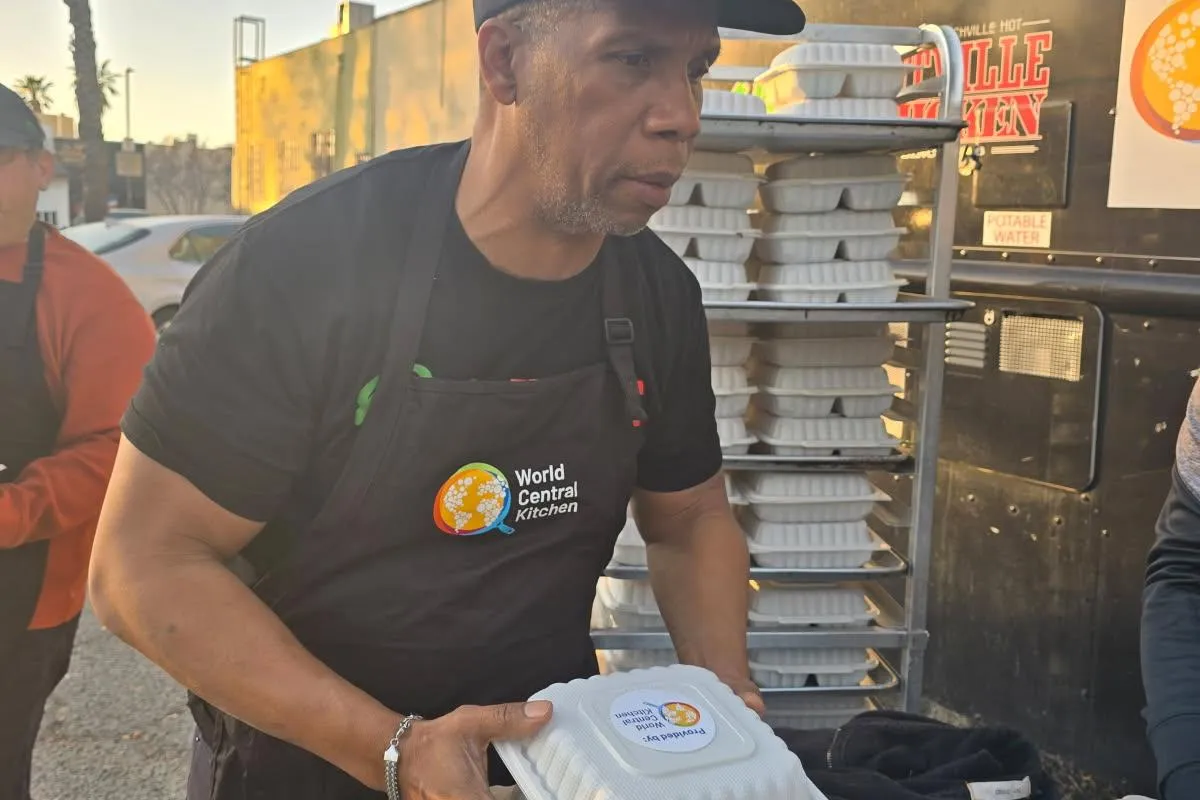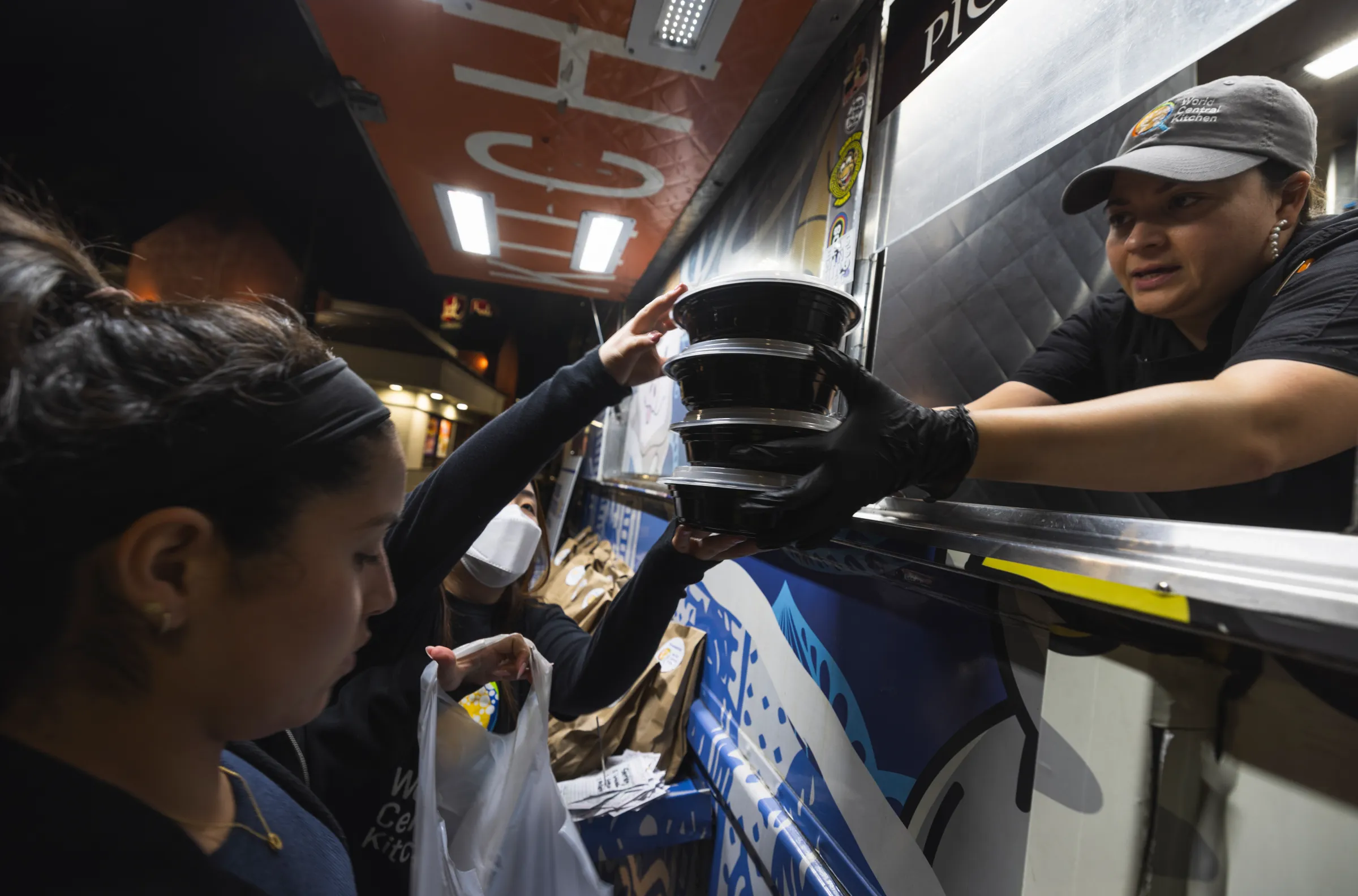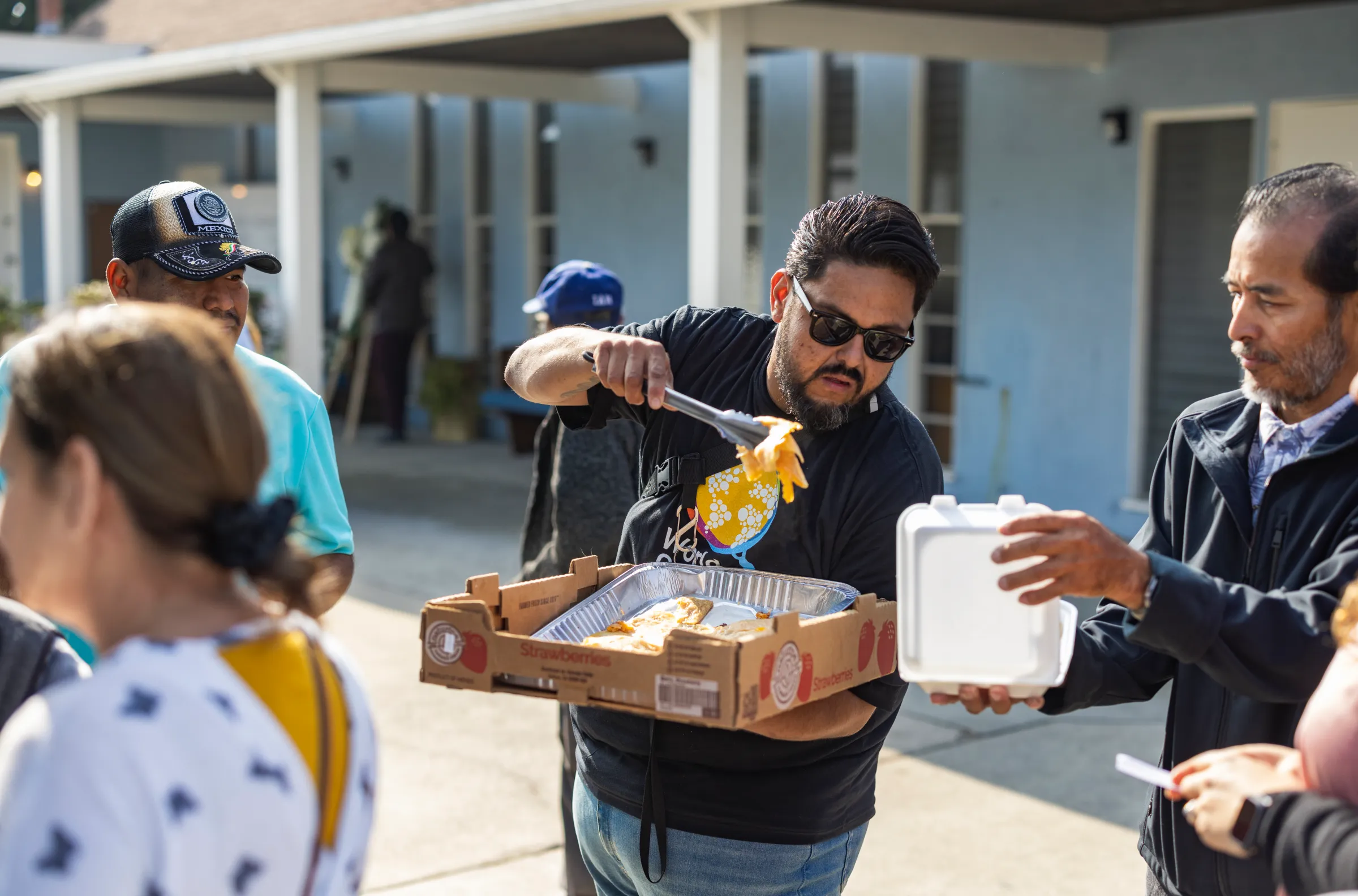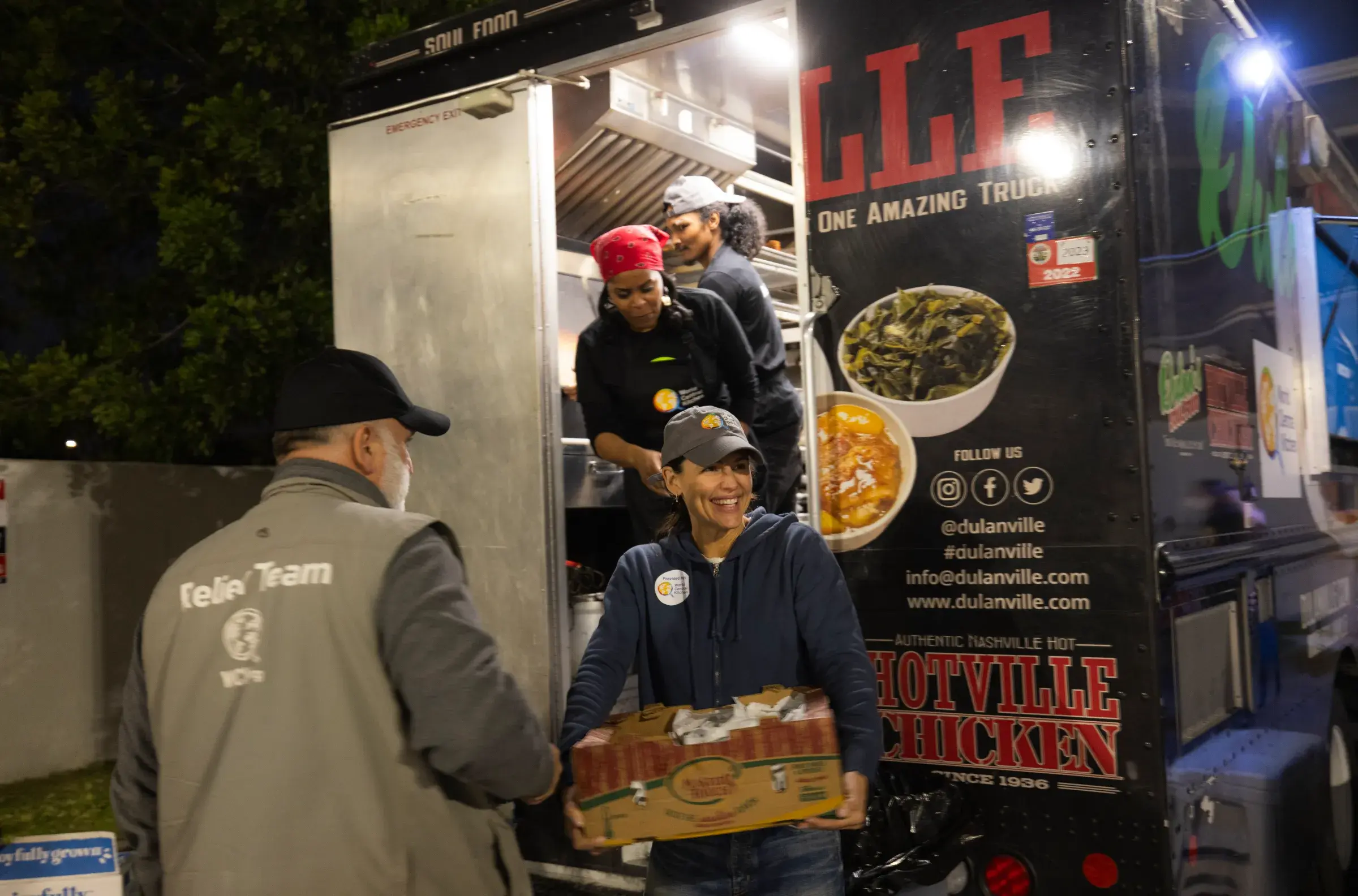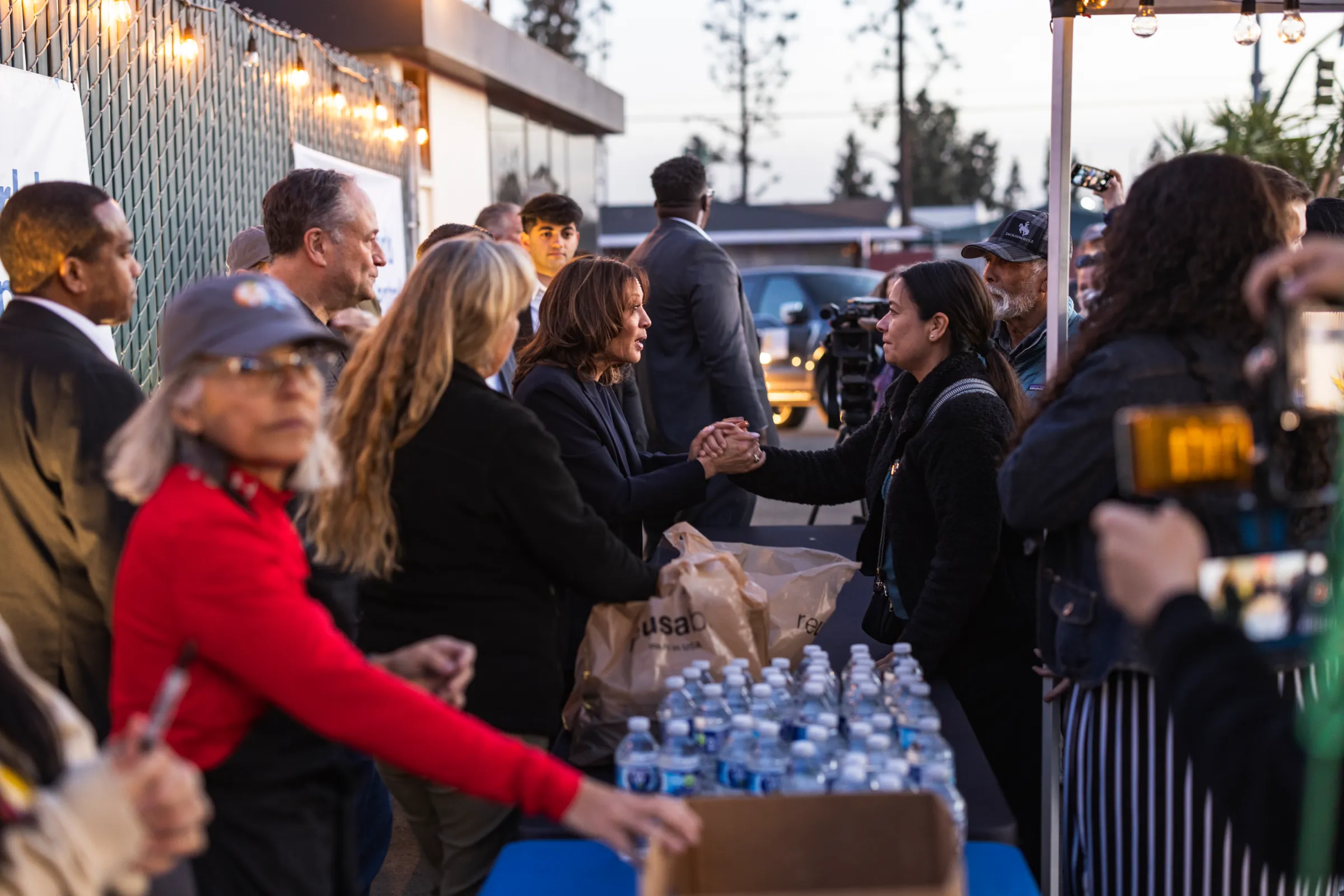
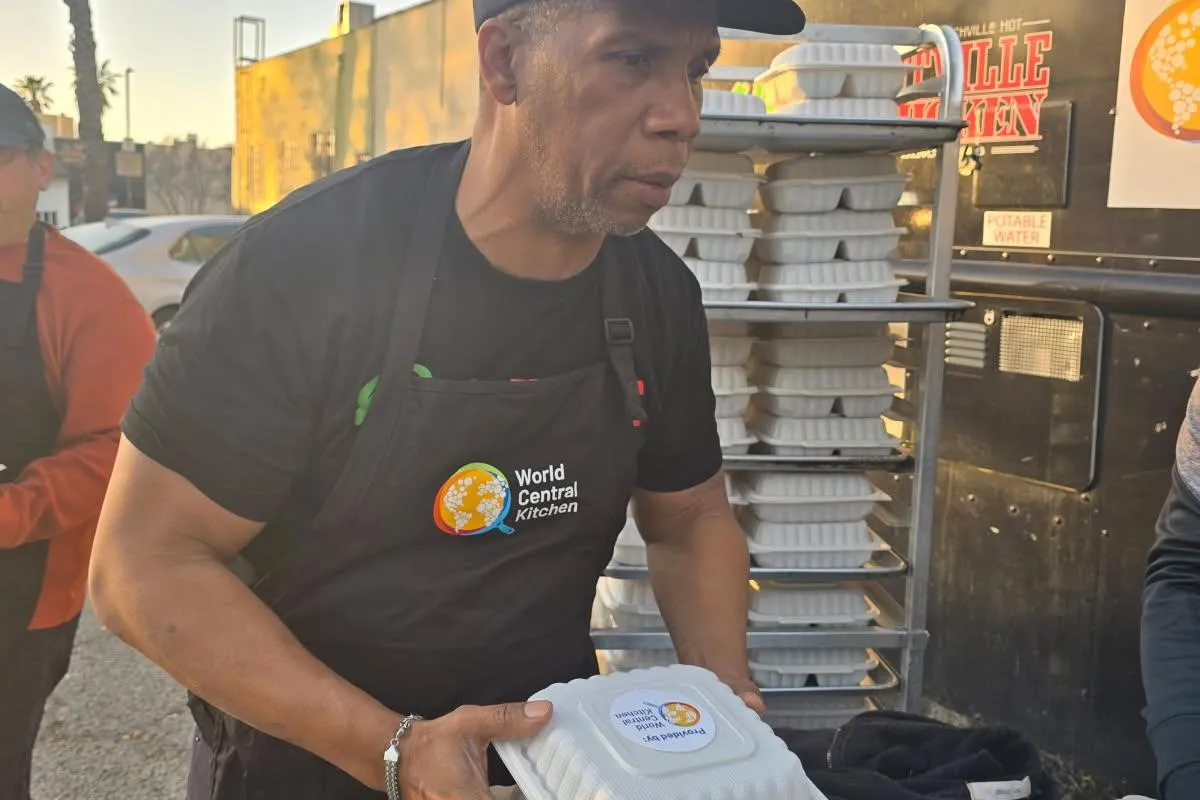
On Wednesday, January 8, chefs Greg Dulan and Kim Prince received a call from José Andrés's World Central Kitchen. They were tasked by the food relief nonprofit with feeding firefighters in Altadena, a historic African American neighborhood devastated by the Eaton Fire just days after New Year's. Prince, a longtime LA resident and founder of Hotville Chicken, and Dulan, a Crenshaw native and owner of Dulan's Soul Food Kitchen in Inglewood, had 24 hours to prepare their Dulanville food truck — and to process the enormity of what lay ahead.
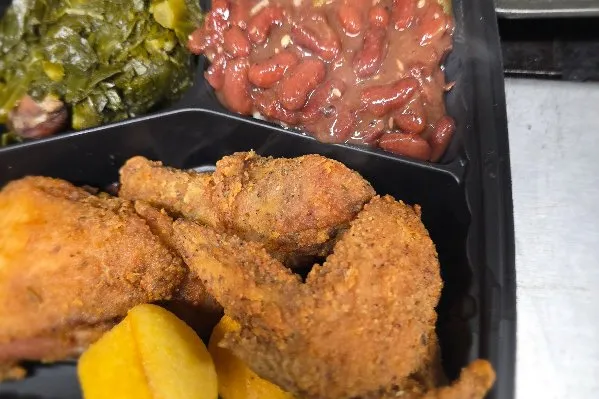
As with so much that week, circumstances changed quickly and repeatedly. Within a day, World Central Kitchen mobilized a cohort of Los Angeles chefs to serve residents impacted by the fires. On that Wednesday, Dulan and Prince drove down Altadena's Woodbury Avenue, past downed power lines, into eerie darkness where houses still smoldered and ash permeated the air. Longtime residents and elders who'd lived in the neighborhood for years sought out their menu of Southern-style comfort food: plant-based jambalaya and vegan coleslaw, fried chicken, cornbread muffins, collard greens, red beans and rice, and sticky ribs nourished a community in deep, unfathomable pain.
"These families have already experienced enough transition and displacement by losing their home," Dulan said. "The least we can offer is a stationed area where they can get meals that they are familiar with — food that they understand."
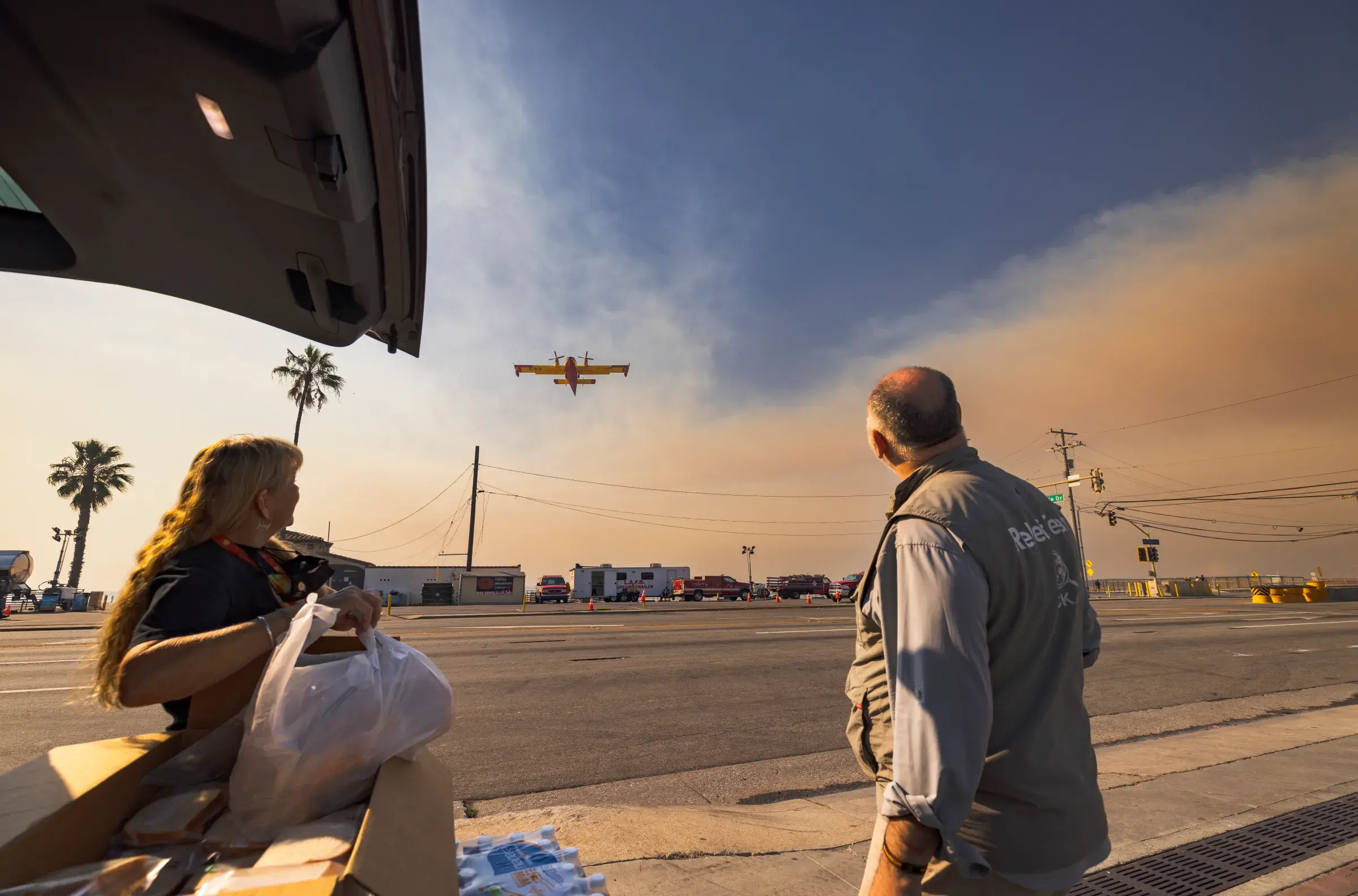
On January 7, the Palisades, Hurst, and Eaton wildfires erupted across Los Angeles, destroying 40,000 acres of homes, businesses, and storied communities. Weeks later, the city continues to reel: neighborhoods have been flattened, beloved restaurants destroyed, historic locations reduced to ashes. Yet amid the tragedy, chefs, restaurants, business owners, and organizations in and outside the City of Angels have worked tirelessly to feed and uplift the Los Angeles community. LA restaurants' striking mobilization efforts reflect the hospitality industry's history of stepping up during communities' most crucial times of need — climate disasters, global pandemics, and national tragedies among them.
"Restaurants are always the first ones to give back," says chef Daniel Shemtob, who lost his Pacific Palisades home in the fires. "During COVID, I watched LA suffer. All our restaurants struggled; I was down 90 percent, and I had to close three restaurants, yet I and friends in the industry were out there giving free meals away. That's what's so remarkable about our industry, and why support is so necessary — it creates the thread of culture, because it's local and it's what we do for each other. It's how we give hospitality, and that multiplies."
"When my parents and grandparents first immigrated to Los Angeles, Altadena helped us find our footing in the United States," says Harry Trinh, creative director of NYC's Welcome to Chinatown. "Because of that community, I had the opportunity to pursue higher education and my world of design, and now I'm giving back."
Trinh and his New York colleagues applied lessons from COVID-19 to support his native LA: they coordinated the Sik Faan Fund ("Sik fa-an" means "let's eat" in Cantonese) for LA's first responders and evacuees from small businesses — similar to those Dulan and Prince served in Altadena. "Los Angeles is such an important part of our national identity," Trinh says. "The people there are part of our community, too. It's important for us to stand up and be there for them during their time of need."
Since the fires began, Los Angeles has sustained an estimated $250 billion in damage. Just five years after the COVID-19 pandemic began, the city's restaurant community, still struggling to recover from previous disasters, finds itself in a more precarious position than ever.
"The crisis follows the global pandemic, economic uncertainty, rising costs, vandalism, unjust lawsuits," says Niki Weber, chief operating officer of Regarding HER, a Los Angeles organization supporting women of color, queer folks, immigrant-owned businesses, and other restaurants helmed by marginalized communities. "Service workers have truly been through it — up to 2024, they thought that was a disaster. Now they have this layered on top, and it's proving insurmountable." Reports indicated on January 17 that while many Los Angeles restaurants remain open, diners aren't coming in, leading to drastic revenue drops.
These layered challenges compelled Melanie McElroy to get involved. The founder of Detroit's Melway Burger pop-up saw it as national heartbreak. She shared a donation link through Instagram the weekend after the fires, identifying three recipient organizations aligned with the pop-up's values: the Mutual Aid LA Network (MALAN) for direct community assistance; the National Day Laborer Organizing Network (NDLON), which supports farmworker fire brigades; and the Anti-Recidivism Coalition (ARC), which supplies incarcerated firefighter encampments. Supporters, some who had lived in or grown up in LA, braved freezing weather to eat burgers at the pop-up's winter residency inside a local brewery, with proceeds split among the three relief organizations.
"Food is the only thing we all have in common, and despite living across the country from this crisis, it's clear we're all in this together," McElroy wrote. "The Melway is happy to give our Detroit neighbors the opportunity to show solidarity with the fire victims, and we hope businesses around the country will do the same."
McElroy joins national relief efforts proving smaller businesses can rally to support restaurants outside their cities. Food industry staff around the country have continued contributing aid to LA's restaurant scene while using their platforms to raise awareness long after the media cycle moved on. In Dallas, Burger Schmurger used a Sunday pop-up to fundraise for Altadena and Pasadena fire victims and the Pasadena Educational Foundation. In Las Vegas, Featherblade Craft Butchery donated 20 percent of a day's proceeds to World Central Kitchen and collected non-perishable food, clothing, and household items for those who lost homes. In late January, Brooklyn's Archestratus Books + Foods hosted a fundraising bake sale for relief efforts. In D.C., chefs Kat Petonito and Rochelle Cooper of the Duck and the Peach hosted a mid-January benefit dinner with local chefs, and Moon Rabbit owner and Stop AAPI Hate co-founder chef Kevin Tien will host a February 9 benefit dinner for victims of LA's Koreatown and historic Altadena.
This ongoing support reflects what LA restaurants desperately need, according to Chris Shepherd, Houston chef and founder of the Southern Smoke Foundation. "The restaurant business has always been stressful, but when it's not busy, it's really stressful," he says. "And then you add natural disasters — it's almost unbearable. Our community is in need."
The most immediate need is financial. Dulan reported serving thousands of meals within the first few days, using his own funds to purchase food and equipment. While World Central Kitchen reimburses food relief partners during disasters, chefs like Dulan often front costs and wait to be reimbursed, adding to the stress.
But the need extends beyond money: many food workers supporting disaster relief efforts require mental health care. The Southern Smoke Foundation, which provides year-round emergency relief to restaurant service community members, has partnered with Cal Lutheran to offer no-cost counseling to food and beverage workers impacted by the fires. Shepherd, who has witnessed the impact of Hurricane Harvey, Hurricane Beryl, and the Great Texas Freeze during his 20-plus year Houston career, says these chefs need someone to talk to. Southern Smoke is allocating resources for LA food workers' mental health while strategizing how to assist with the community's steep financial needs in coming months.
"The mental health care program has always been there to take care of folks, to give them a place to process this trauma, to have space for difficult conversations," he says.
Federal and state-level failures contribute to the industry's struggles, and restaurateurs are often left supporting themselves while also supporting communities in need. Longtime restaurateurs like Mary Sue Milliken, who cofounded Border Grill in Las Vegas with business partner chef Susan Feniger, emphasize the need to push those in power to support an industry essential to American culture. "I've been telling people, you may not be in a position to part with dollars and cents, which is completely understandable, but make yourself heard," Milliken says. "Make some noise, and engage with your lawmakers."
Former Food & Wine restaurant editor and LA resident Khushbu Shah reinforced the need for stronger industry support in her Substack Tap Is Fine, noting the hypocrisy of businesses like OpenTable and Resy not being at the forefront of relief efforts for the very restaurants keeping both platforms operational. Resy eventually pledged $200,000 to World Central Kitchen, and OpenTable launched a daylong social media fundraising initiative for the California Restaurant Foundation. But Shah, argues these efforts aren't enough. "Rebuilding after a major natural disaster like this is a marathon, not a sprint," she wrote. "If we want to rebuild these communities, we need to ensure restaurants and bakeries and coffee shops are standing as well. These small businesses are the heart of the cities we love and call home."
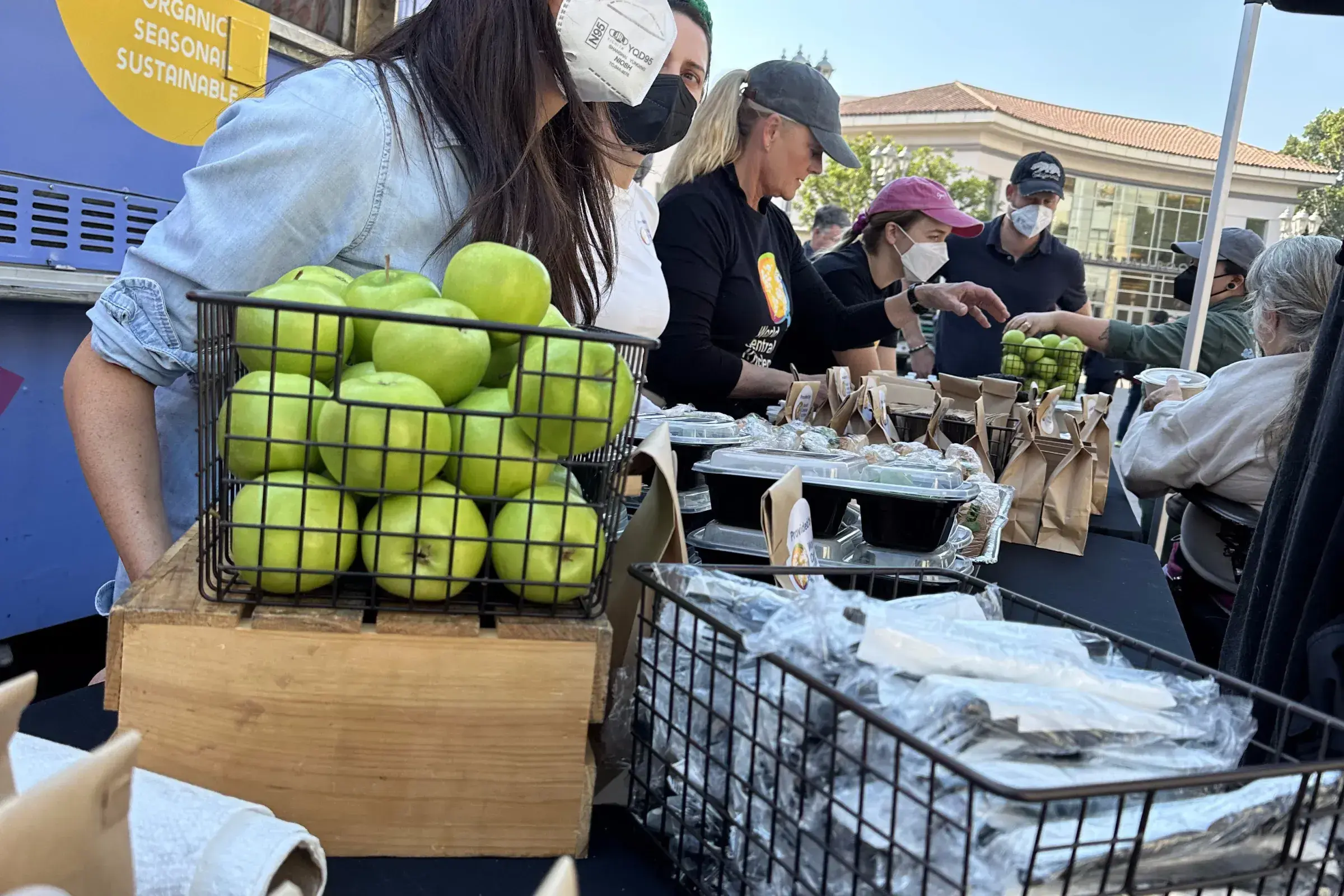
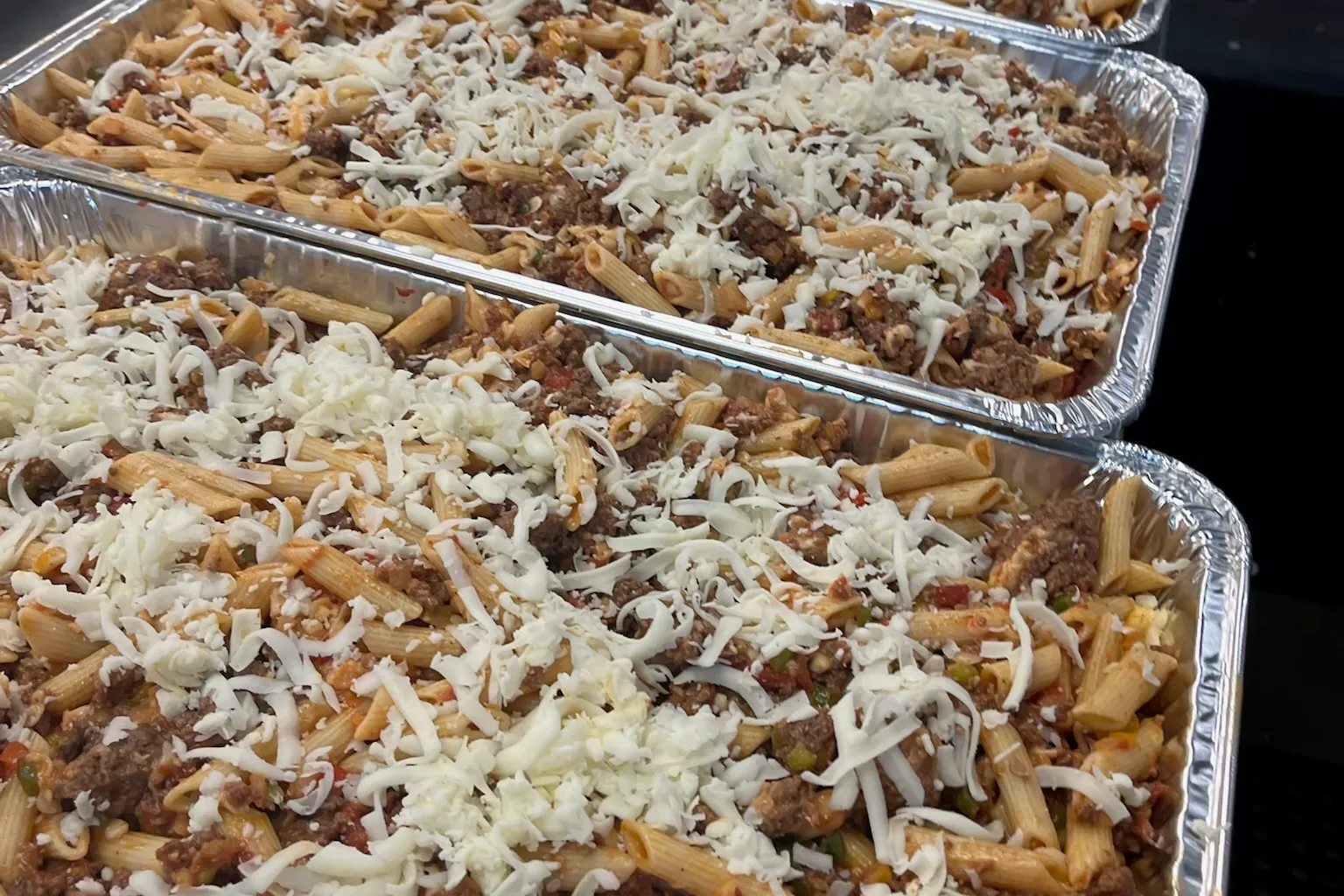
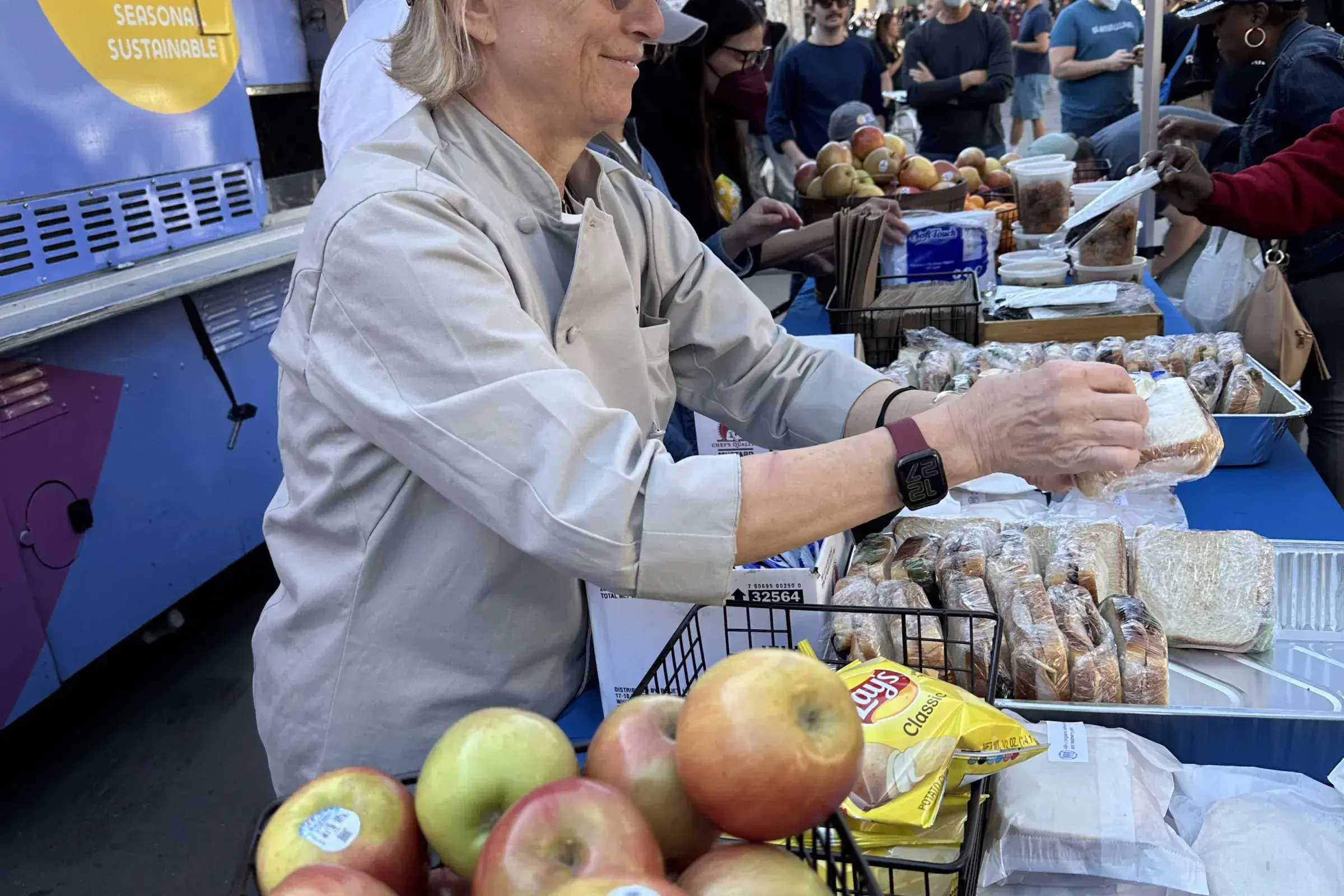
The recovery continues at the heart of LA's restaurant community. "It's a great problem to have — a bunch of people want to help," says Feniger, who along with Milliken served upwards of 2,000 hot meals at lunch and 1,000 at dinner at posts throughout LA during the height of the fires. "They want to come, they want to serve food. They want to connect with people who are out of their homes and be able to give them a warm meal or a sandwich or a cup of coffee."
Milliken is heading a restaurant recovery fund for local, independent restaurants — not only those impacted by evacuations and smoke, but also those whose sales dropped upwards of 50 percent following the wildfires. Weber's organization, which Milliken helped found, continues supporting women and vulnerable restaurants with limited representation or access to capital, especially those owned by immigrants and people of color. "It's one of the hardest restaurant industries in the country, but also one of the most wonderful," Milliken says. "We've long helped our community because it's in our DNA — it's ingrained. Now, we need that support from our community and our industry, and that help can come from every single action, big or small."
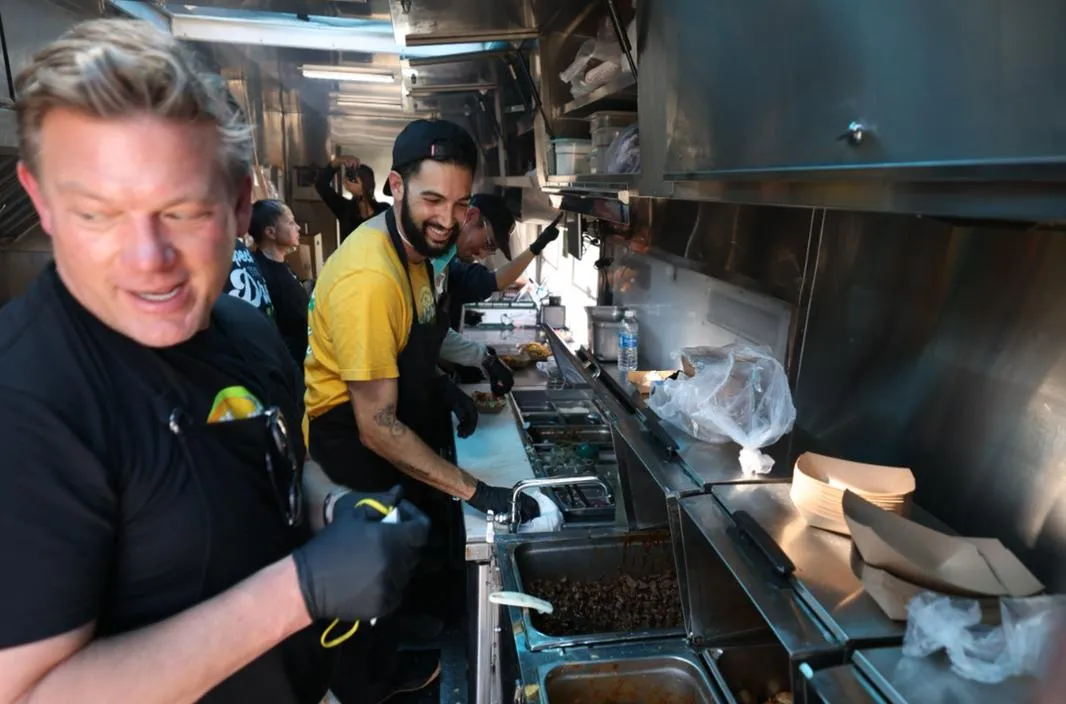
For Shemtob, owner of LA-based Snibbs footwear and the Lime Truck, those actions begin right in the kitchen. The husband and soon-to-be-father said the seven days following the initial wildfire outbreak were some of the hardest of his life, but being near his food truck — feeding survivors and first responders — made him crack a smile. With World Central Kitchen's support, he took his food truck across LA, serving communities in North Tarzana, Pasadena, and the Palisades, and offered free shoes to civilians impacted by the wildfires. "As soon as I got on my truck, we fed 500 people affected by the fires in 90 minutes," he says. "I was hustling, giving back, doing all the things I love about food and hospitality. And I started to feel instantly better."
"There's nothing better than feeling useful when you're surrounded by helplessness," said Milliken. "If you can find a little light in the darkness, be able to hand someone a hot meal when you know it's a firefighter who's been working 24 hours and is halfway through their shift — there's just not a better feeling."