
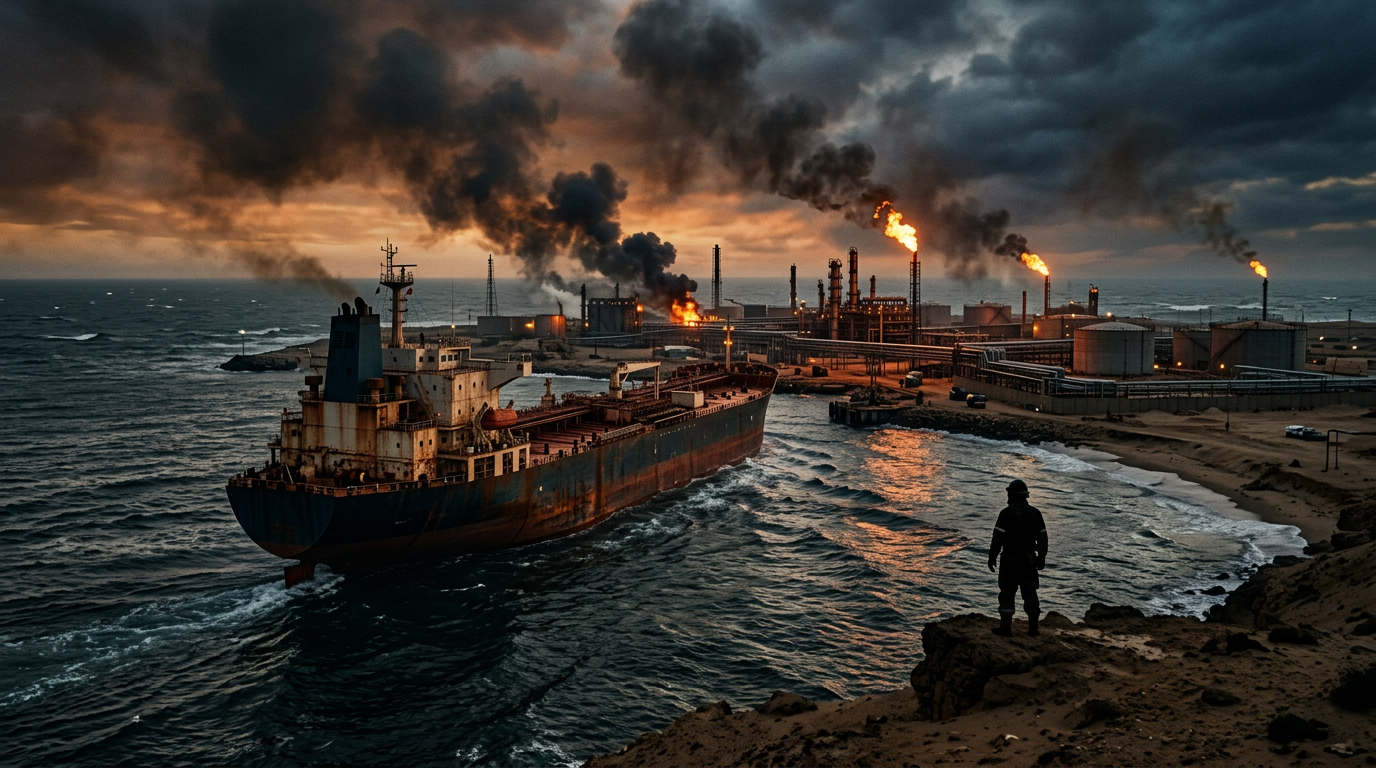
Oil prices surged above $114 a barrel on Monday, extending a sharp rally driven by escalating conflict in the Middle East and deepening concerns over energy supply disruptions. Brent crude and U.S. benchmark West Texas Intermediate both jumped more than 20% from Friday's closing levels as traders reacted to mounting risks around production, storage and shipping across the region.
The latest move pushed crude to its highest level since 2022 and intensified concerns that a prolonged energy shock could weigh on global growth. The Strait of Hormuz, a key route for roughly one-fifth of the world's oil shipments, has become a central focus for investors as security threats complicate tanker movements and raise the risk of broader supply bottlenecks.
The jump in oil fed through quickly into financial markets. Japan's Nikkei 225 fell more than 7% early Monday, South Korea's Kospi dropped 7.6%, and other Asian benchmarks also moved sharply lower. U.S. stock index futures pointed to additional losses on Wall Street, suggesting investors were preparing for weaker risk appetite as higher energy costs ripple across economies.
Market participants are increasingly worried that a sustained period of oil above $100 could reignite inflation pressures just as major economies are already grappling with slower activity, tariff uncertainty and fragile consumer sentiment. Higher gasoline and diesel prices also threaten to squeeze household spending, especially in the United States, where consumption remains a major driver of economic growth.
The war has also heightened anxiety over damage to energy infrastructure. Oil and gas facilities in several countries have come under pressure, while reduced export capacity and transportation risks have limited the market's ability to absorb further shocks. Analysts warn that if the disruption persists, refiners, import-dependent economies and central banks could face renewed strain.
Beyond crude, natural gas prices have also moved higher, reinforcing the broader inflationary implications of the conflict. Currency markets reflected a defensive tone as investors favored the U.S. dollar, while equities and other risk assets came under selling pressure.
For policymakers, the latest surge in oil poses a difficult trade-off. If inflation accelerates because of energy, central banks may have less room to support growth. If they prioritize slowing economies instead, price pressures could remain elevated for longer. That combination has revived fears of a stagflationary backdrop in global markets.
The coming days will likely depend on whether energy flows through the Gulf can stabilize and whether the conflict broadens further. For now, the sharp rise in crude has become the clearest signal yet that geopolitical risk is again driving the macro agenda.
Source: https://apnews.com/article/markets-oil-iran-trump-war-brent-72e8c9a29c2ba1fd761ee968f3d4e553