
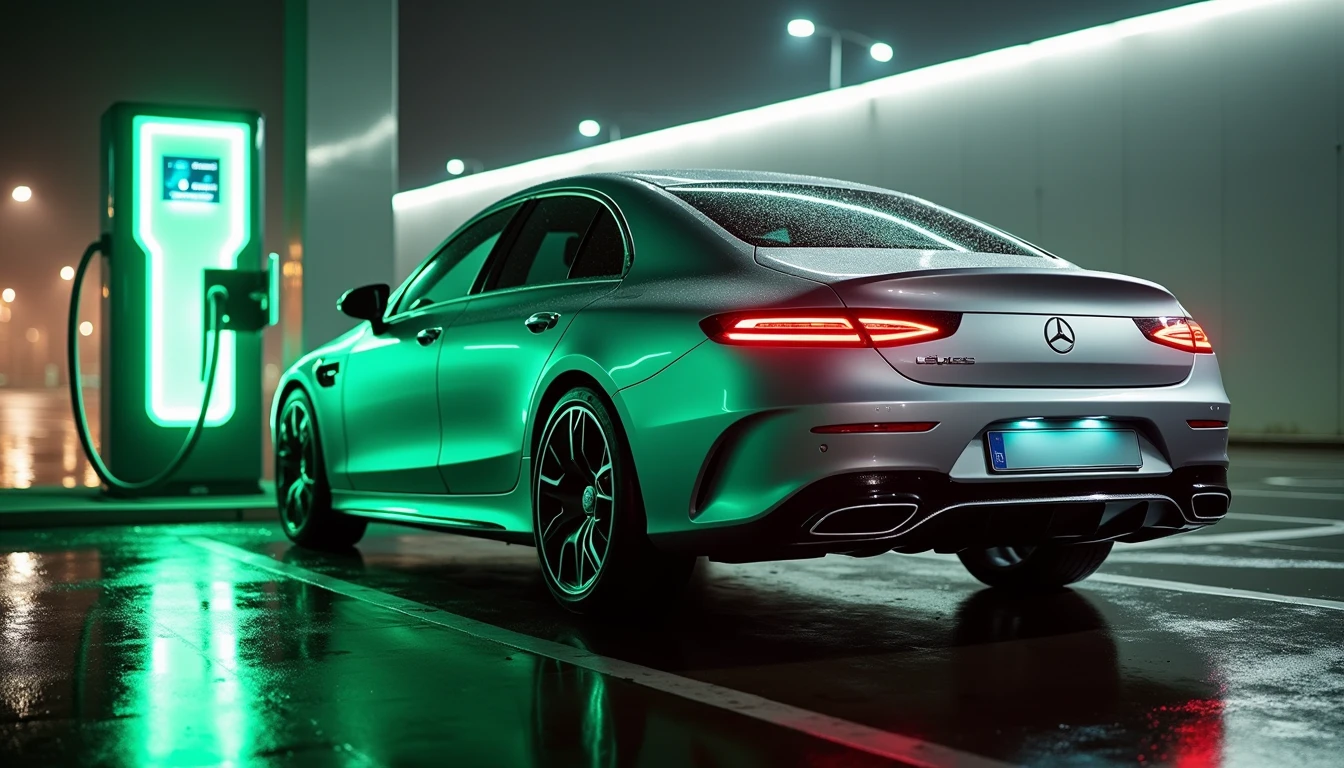
Mercedes EQS Gets 800V Architecture, Steer-by-Wire, and 926 km WLTP Range in Major Overhaul
Mercedes-Benz has unveiled the heavily revised EQS, and calling this a "refresh" is a disservice to the engineering effort involved. The Stuttgart automaker has integrated an 800-volt electrical architecture, steer-by-wire technology, and a battery pack with silicon oxide-graphite anodes, pushing WLTP range to 926 km. Orders open in Germany starting at €94,403, signaling a aggressive push to reclaim leadership in the luxury EV segment.
This update represents the most significant change to the flagship sedan since its 2021 launch. Mercedes confirms that over a quarter of the vehicle's components are newly developed, reworked, or refined. That figure points to a structural overhaul rather than a cosmetic update. The EQS retains its familiar silhouette, but the underlying architecture, drivetrain, and software stack are fundamentally new.
Architecture and the 800-Volt Leap
The core of the update is the migration to an 800-volt system. This architecture enables DC charging speeds up to 350 kW. Mercedes claims the system can add 320 km (199 miles) of WLTP range in just 10 minutes. The battery pack itself now holds 122 kWh of usable energy, up from the previous 118 kWh. Engineers achieved this capacity increase without altering the pack's physical dimensions by switching to silicon oxide-graphite composite anodes, which improve both gravimetric and volumetric energy density. Cobalt content has also been further reduced.
Backward compatibility remains intact. When connected to 400-volt charging infrastructure, the battery management system splits the pack into two virtual halves, charging each at up to 175 kW. This parallel approach maintains high charging speeds on older networks where single-path limitations often throttle performance.
The electric drive units (EDUs) have also seen a generational update. AWD models feature a front EDU designed as a dedicated boost motor with an integrated disconnect unit, allowing the system to instantly engage or disengage the front axle to minimize drag during cruising. The rear axle introduces a two-speed gearbox. The short first gear optimizes launch performance, while the long second gear reduces motor RPM for highway efficiency. Regenerative braking capacity increases by 33% to 385 kW, a figure Mercedes says is sufficient to handle virtually all everyday deceleration without engaging the friction brakes.
Steer-by-Wire and MB.OS
Mercedes also confirms steer-by-wire technology for the EQS, marking the first production deployment by a German automaker. The system eliminates the mechanical link between the steering column and the front wheels, replacing it with electronic signal processing. This configuration allows for a flatter steering wheel design, which Mercedes states improves cabin volume and driver display visibility while easing ingress and egress.
The steer-by-wire system will not be available at launch. Mercedes notes the feature arrives "a few months after market introduction." Safety redundancy is built into the architecture with duplicate signal paths. In the event of a complete system failure, Mercedes indicates that the 10-degree rear-axle steering combined with individual wheel braking via ESP can maintain directional control, preventing a total loss of steering authority.
Under the dashboard, the EQS runs MB.OS, the same operating system debuting in the CLA. This platform integrates vehicle control functions and connects to the Mercedes-Benz Intelligent Cloud for over-the-air updates. The MBUX Virtual Assistant now incorporates AI from Microsoft to enhance natural language processing and contextual responses.
Market Positioning and Pricing
The entry-level EQS 400 starts at €79,330 net in Germany, rising to approximately €94,403 with VAT. That translates to roughly $103,000. This variant delivers 270 kW of output and a 112 kWh battery. Mercedes is clearly positioning this trim against the BMW i7, which starts at $107,250 in the U.S. with an EPA range of just 311 miles.
The range-topping EQS 450+ leads with the 926 km WLTP figure, a 13% improvement over the outgoing model. In EPA terms, that projects to a range likely landing around 400 miles, offering a substantial advantage in range-per-dollar against direct competitors.
The EQS update addresses the primary critiques of the original model: charging speed, efficiency, and drivetrain refinement. With 800-volt capability, a two-speed rear axle, and steer-by-wire, Mercedes is forcing the competition to respond on hardware, not just software updates.