These little dots on the map have a lot to offer.
There is no right way to do Europe. Whether you’re enchanted by the favorites of London, Paris, and Rome, or you’re yearning to discover under-radar cities of Baku, Plovdiv, and Tbilisi, you will always return with stars in your eyes. If you haven’t chalked out your itinerary for the summer (damn, that’s last-minute), why don’t you give a theme to your travels? Look for the tiny dots on the map and connect them for your holiday of “I went to the smallest countries in Europe.” We’re happy to start you off with small countries that often get lost next to their dominant neighbors.
The smallest country in the world is located in Rome’s heartland. Vatican City is a monarchy with the pope as its head of state and it’s a culturally, spiritually, and historically important site for Christians. There are 840 permanent residents within the walls of this city-state that has its own newspaper, train station, coins, and art restoration school.
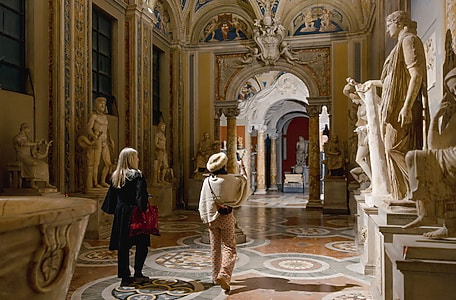
Even if you don’t have a religious bone in your body, the Vatican Museums are worth exploring. The Sistine Chapel is home to Michelangelo’s finest work—the mesmerizing ceiling frescos. St. Peter’s Basilica is the largest in Italy, and most revered for its prominence. Built in 1506 and consecrated in 1626, it’s a Renaissance masterpiece and it is believed that the 4th-century shrine it sits atop is where St Peter was buried.
If you’re in the Vatican on a Wednesday, you might be able to receive the Pope’s blessing—if he’s in the country, he holds a Papal Audience every week that draws a crowd.
Monaco has an area of mere 0.78 square miles (smaller than Central Park), but everything else about the sovereign country on the French Riviera is grand. It hosts the Grand Prix, the Monte-Carlo Masters, and the Monaco Yacht Show, so you can imagine the level of glam and opulence it’s rolling in. The world’s second-smallest country is the playground of millionaires and billionaires (it’s also a tax haven), so summer is all about superyachts and high stakes in the casinos.
It’s an expensive country (the GDP is $165,420 and Monaco has no poverty), so up your budget if you’re planning to stay a night or two. Otherwise, a day trip from Nice might have to be it.
The world’s oldest surviving republic is surrounded by Italy on every side. San Marino is one of the smallest countries in the world (third smallest in Europe) with an area of 23.6 square miles and a population of 33,400 people. Its eponymous capital is a UNESCO World Heritage Site. The city of San Marino sits atop a mountain and delights tourists with its medieval architecture and picturesque views from the castles.
The landlocked country can be covered in a day, and you should bring your passport to get it stamped at the tourist office for €5—there is no border between Italy and San Marino, so you won’t actually need your passport.
Straddling the majestic mountains in the Eastern Pyrenees, the micronation of Andorra is 180 square miles, out of which 92% is forest land. The country lies between Spain and France, and was ruled by the Spanish bishop of Urgell and the leader of France for 700 years. It still has two heads of state, but the roles are honorary and the country has a parliamentary government.
Around 10 million people visit Andorra each year. Adventure sports are huge here with 186 miles of slopes for skiing and over 60 mountain trails. Plus, there are over 1,000 shops in the country and the Andorra Shopping Autumn Festival is a major draw.
Related: Ever Heard of This Extremely Tiny European Country?
To get to Andorra, you can fly from Madrid to Andorra-La Seu d’Urgell Airport, the closest Spanish airport, and then take a bus that’s scheduled according to the flight timings (a 60-minute ride).
Another landlocked European nation, Liechtenstein is a monarchy sandwiched between Austria and Switzerland. It’s nestled deep in the Alps and it’s the world’s sixth smallest country, covering an area of 59 square miles. This Lilliputian micronation has no airport, so you’ll have to take a bus or train from its neighbors.
Liechtenstein is a prosperous country with a GDP of $165,028 (second highest in the world) and population of 37,000. You can explore the city in a day if you’re just wandering to catch the dramatic views of the fairytale castle with the backdrop of the mountains. An adventurer’s soul will enjoy the hikes and ski slopes.
The archipelago of Malta is a Mediterranean gem. Steeped in history, the 122-square-mile nation makes a striking picture with towering limestone cliffs, indomitable fortresses, and impressive temples. Due to its location between Italy and North Africa, it was occupied by Phoenecians, Greeks, Arabs, Romans, and most recently France and Britain—it got independence from Britain in 1964. The pieces of its history can be seen in its capital of Valletta and the Three Cities of historic significance (the fortified Birgu, the harbor city of Cospicua, and the tiny city of Senglea).
Related: Going to Malta For The First Time? You Need to Know These 10 Things
The Grand Duchy of Luxembourg, despite its small size (999 square miles), is a major financial centre in Europe. Landlocked by Belgium, Germany, and France, it was occupied by Germany during World Wars I and II and the remnants of that time are still visible in the country.
It’s a rich nation—both economically and naturally. Beautiful medieval castles, quaint villages, and rolling hills are part of the dreamy landscape. Luxembourg City’s Old Town is a UNESCO World Heritage Site—walking through the fortified city’s cobbled streets on the cliffs and looking at its bastions and towers is an extraordinary experience.
As steeped in history as it is, Luxembourg epitomizes cosmopolitan culture. Its soul may be ancient, but the nation is international and hip—71% of its population is foreign-born, attracted to its high standard of living. Modern architecture, diverse culinary offerings (including wineries along the beautiful River Moselle), and an array of festivals and events string the fabrics of its heterogeneous culture.