
Why Île d’Oléron is France’s best-kept secret.
Corsica, sure. Île de Ré, maybe, but you likely haven’t heard about Île D’Oléron, and the French families who spend blissful, nature-based vacations here would probably like to keep it that way. Here’s why it is France’s best-kept secret.
Oléron Island, the largest French island on the Atlantic coast, is a destination renowned for its unspoiled natural beauty, stunning beaches, surfing, forests, vineyards, and colorful fishing villages. Famous for its Marennes-Oléron oysters, the island is a paradise for seafood lovers. Oléron can be easily explored by bicycle, taking in the unspoiled natural landscapes. Yet surprisingly, only seven percent of visitors are non-French. In a time when regions like the Mediterranean are feeling the strain of overtourism, Île d’Oléron offers a family-friendly and eco-conscious alternative. This guide unlocks the island's secrets, and maybe has a glass or two of the region’s famous Cognac along the way.
Also known as La Lumineuse (“the luminous one”), L’Île d’Oléron is a blissful haven for nature, wine, and adventure seekers located on France’s western Atlantic coast in the Charente-Maritime department of Nouvelle-Aquitaine. With a surface area of 67 square miles, Oléron is the largest French island after Corsica. A sweeping bridge connects it to the French mainland by car and bus. The island is also accessible for foot passengers by boat (50 minutes) from the historic town of La Rochelle, which has an airport and direct SNCF train links to Paris and Bordeaux. Oléron offers a wide variety of accommodations, from camping and glamping to gîtes, holiday homes, and family-run hotels.
The best way to get about is on two wheels. The island is 20 miles long and crisscrossed by almost 100 miles of cycle paths. For a small area, Oléron has an incredible variety of scenery, from sunny springtime mimosa to woodland forests, salt marshes, and oyster beds, to miles of golden sandy beaches and, of course, vineyards. The cycle paths are clearly marked and color-coded, but bring a cycle map with you. You can find these at tourist offices dotted around the island and readily available from bike hire shops, hotel, and campsite receptions. Paths are mostly flat, but do consider hiring an electric bike to get you where you want to go.
If you’re looking for the castle, you’re about five centuries too late—it was destroyed during the Wars of Religion. On its ruins stands a citadel fortification built in the late 1600s. During World War II this was one of the last pockets of German resistance and was bombed by the Allies in 1945 as France was liberated. Happily, Château d’Oléron enjoys a much more peaceful existence nowadays. It is famed for its ostériculture, or oyster farming. Spend a few hours exploring the charming, rainbow-painted oyster cabins turned artist studios. Write a wish or a loved one’s name on an oyster shell and hang it on the bridge for good luck.
Oyster farming is big business on Oléron. Arguably the best in France—a bold claim—the shellfish delicacy is worth its weight in gold for the island. From Château d’Oléron, set off on the Oyster Route (La Route des Huîtres) toward Boyardville along the eastern coast. On bike, this is a fascinating route through former salt marshes now converted into oyster channels. Passing through the nature reserves to the sound of the whispering rushes feels otherworldly. Stop off at the brightly colored huts to enjoy tastings or buy oysters direct from the producers at Fort Royer or Port de la Baudissière.
Should you ask a local Oléronais where to find the Chassiron Lighthouse, you might be surprised to hear “au bout du monde,” or “at the end of the earth.” Perched on a cliff, overlooking the Atlantic Ocean, the original Phare de Chassiron was built in 1685 to guide mariners across the dangerous Pertuis d’Antioche, an infamous shipwreck site. Today’s lighthouse has been in service since 1836. Its striking black-and-white stripes and 224 steps make this an unforgettable place for a leg-day workout. Once at the top, enjoy the 360-degree views across the Atlantic shoreline toward Île de Ré and Fort Boyard (built by Napoléon, now the location of a famous French TV show). If you have a head for heights, look down to marvel at the cleverly designed gardens set out like a compass below.
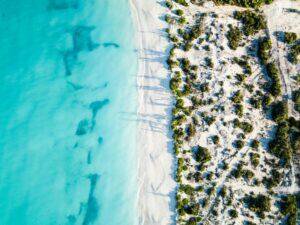
Who doesn’t love a brightly colored beach hut? On Plage de la Boirie, toward the north of the island, they are picture-perfect. In the summer season, certain beaches have lifeguards, so head to those for safer swimming. The beaches on the eastern side of the island tend to be more sheltered. When the tide is right and the wind is up, the western side becomes a kitesurfing/surfing hot spot. For sunset, head west along the sandy miles of Plage des Huttes.
Viticulture on Oléron stretches back to the third century. The island’s wines became prized by northern courts and shipped to England and beyond. That story nearly ended in 1872, when the phylloxera epidemic devastated European vines and laid waste to Oléron’s crops. Salvation came from across the Atlantic: American rootstocks were grafted to bolster fragile French varieties. A small island path still bears witness to the rescue: Passe de la Vigne Américaine.
Today, Oléron has 2,223 acres of vineyards, many of them small, family-run estates like Domaine Paradisiø, where you can stop, taste, and buy bottles directly from the growers. The island’s harvest finds many expressions: white, red, and rosé wines; the celebrated liqueur wine Pineau des Charentes; and grapes sent inland to become Cognac. Sauvignon, Merlot, Pinot Noir, and Vin Charentais all flourish here.
Don Quixote may have wanted to fight them, but Oléron lovingly preserves them. Le Moulin de la Brée is a fully restored working windmill. The mill welcomes visitors to discover the history of flour milling at its charming museum, where you can learn about the meticulous restoration that took place in 2022. Visitors can taste the mill’s produce at the on-site restaurant. On the menu: pizza baked with freshly milled flour and other culinary delights.
Should you be thinking of upping sticks and moving to this beautiful French island, the good news is there’s a job vacancy. The catch? You must like salt. Oléron is on the lookout for its next saunier, or sea-salt farmer. Before the oyster rush took hold, Oléron’s big business was “white gold,” more commonly known as salt. Now there’s only a handful of working salt pans, but they sell out of their popular salt harvest every year. At Le Port des Salines, visit the eco-museum that traces the history of the sea salt-harvesting process. You can even try your hand at the job yourself. Who knows—if you’re any good, maybe you’ll get the full-time gig?
Fifty minutes away by boat is the historic maritime port of La Rochelle. Two impressive stone towers majestically guard the entrance to the town. Some of La Rochelle’s architecture dates to medieval times. Despite its ancient past, the town is full of life, hosting one of France’s most popular summer music festivals, Les Francofolies. The pedestrianized town center makes it easy to get around on foot or bike. Kids will love the innovative Aquarium La Rochelle with its shark amphitheater. The aquarium is also home to a sea turtle research and treatment center. For a boutique stay in the heart of the old town’s cobbled streets, try Hôtel Saint Nicolas. Local delicacies, including oysters and escargots like mamie makes, await at the family-run Le Comptoir Saoufé. La Rochelle is connected by a 1.8-mile-long toll bridge to Île de Ré, a sought-after island retreat popular with Parisians and vacationers alike.