Every year, the National Highway Traffic Safety Administration publishes recall statistics that give us a raw look at automotive safety. For those of us who track the industry, these figures are more than just headlines — they're a signal about quality control, supplier relationships, and how quickly automakers fix problems. Here's what the latest NHTSA recall statistics show and why they matter.
The Big Picture: How Many Recalls in 2024?
Through the first three quarters of 2024, NHTSA recorded roughly 350 recall campaigns affecting over 25 million vehicles. That's on pace with the elevated levels of the past three years, when annual recalls consistently topped 30 million units. The average recall size hovers around 70,000 vehicles, though a handful of massive campaigns — Ford's rearview camera glitch affecting 1.5 million units, for example — pull the average up.
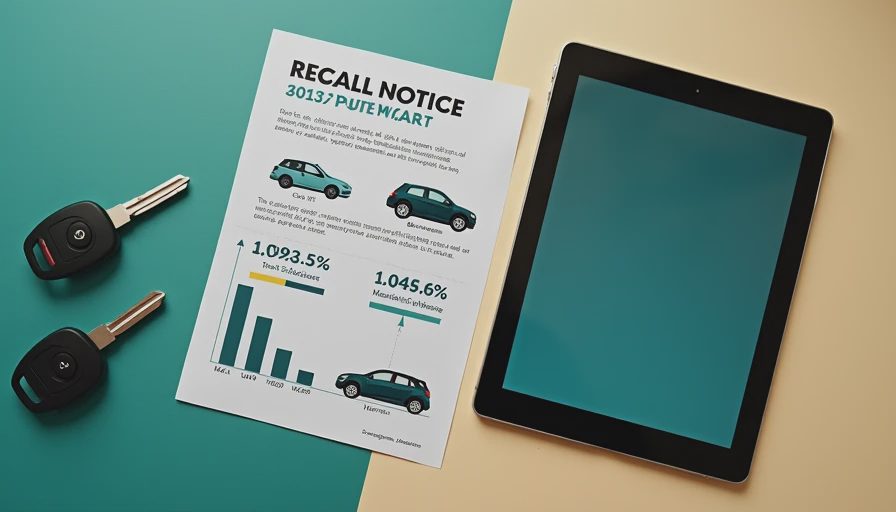
It's worth noting that the raw count of recalls doesn't tell the whole story. A single campaign covering millions of cars can skew the numbers. But the NHTSA recall statistics also track completion rates, which reveal how many affected owners actually get the fix. For 2024, completion rates across the industry sit at about 75%, meaning nearly a quarter of recalled vehicles remain unrepaired.

Which Brands Lead the Recall List?
If you look at the raw NHTSA recall statistics by manufacturer, Ford and Stellantis regularly top the list — not necessarily because their cars are more dangerous, but because they tend to recall in larger batches. Ford alone has issued over 50 campaigns in 2024, affecting roughly 6 million vehicles. Stellantis trails close behind with 45 campaigns covering 5 million units.
Tesla, despite its smaller sales volume, has also been active: over a dozen recalls in 2024, mostly pushed via over-the-air software updates. The numbers here need context — a software fix doesn't require a dealer visit and has a near-100% completion rate, so the real-world impact is different from a physical component replacement.
On the other end, Toyota and Honda maintain relatively low recall counts, consistent with their reputation for quality. But that doesn't mean they're immune; Toyota's 2024 recall for an engine stall issue covered 1.2 million vehicles.
Safety Trends Hidden in the Data
Beyond the brand-level noise, the NHTSA recall statistics reveal two broader trends. First, software-related recalls are rising. In 2024, about 15% of all recall campaigns involved software glitches — up from 10% five years ago. As cars become more connected, this percentage will likely climb. Second, airbag-related recalls, once the dominant category, have fallen sharply since the Takata bankruptcies. Takata-related recalls still pop up occasionally, but the spike is over.
Another trend: the median time from defect discovery to recall filing has shrunk. Automakers are filing faster, partly because NHTSA has increased pressure and partly because social media makes it harder to keep problems quiet. That's good for consumers, but it also means more recalls in the short term as companies proactively catch issues.
Why These Statistics Matter for You
If you're shopping for a used car, NHTSA recall statistics can point you toward models with fewer open recalls. Check the NHTSA's recall lookup tool before you buy — it takes two minutes and can reveal a vehicle that's never been fixed. For new car buyers, pay attention to brand recall frequency. While not the only quality metric, a brand that recalls often may have systemic issues.
Also understand the completion rate. If you buy a used car with an open recall, the dealer is obligated to fix it for free — but only if the recall is still active. Some older recalls expire after a certain period. The NHTSA recall statistics show that about 50 million vehicles on U.S. roads have at least one unfixed recall. That's roughly one in six cars.
Beyond the Headline: What's Not in the Numbers
The NHTSA recall statistics don't capture everything. They don't count recalls that were handled quietly through service bulletins or goodwill programs. They don't differentiate between a recall for a loose bolt and one for a brake failure. And they don't account for the fact that some automakers are better at getting the word out — a high recall count can actually signal transparency, not incompetence.
So when you read a headline that a brand has the most recalls, dig deeper. Look at the nature of the defects, how many vehicles were affected, and what percentage got fixed. That's where the real story hides.
For industry watchers, the NHTSA recall statistics remain the best public window into vehicle safety. They're imperfect, but they're all we've got. Pay attention to the trends, ignore the noise, and always check for open recalls before you buy.
How to Use NHTSA Recall Statistics: A Quick Checklist
If you're about to buy a car, don't skip this step. The NHTSA recall statistics are your best friend. Here's a straightforward process:
- Check the specific model year you're eyeing on the NHTSA's website. Enter the VIN or search by make and model. Look for any open recalls that haven't been repaired. According to the latest NHTSA recall statistics, about 25% of vehicles have at least one unresolved recall.
- Look at the brand's overall recall history. Use the same recall data to see if the manufacturer has a pattern of frequent campaigns. For example, some brands average several per year across their lineup.
- Pay attention to the nature of the recall. Is it a minor glitch or a safety-critical defect like steering failure? The NHTSA database doesn't rank severity, but the description will tell you.
- Ask the dealer to complete any open recalls before you take delivery. Federal law requires them to do it at no cost. Use the completion rate as a benchmark — if a model has a low rate, it may indicate owners are ignoring fixes.
- Set a reminder to check for future recalls after purchase. Sign up for NHTSA alerts. Many recalls get issued after a car is sold, and you want to be among the first to know.
By following these five steps, you turn the NHTSA recall statistics into a practical tool that protects your safety and your wallet.

Travellers Write
No letters yet — be the first traveller to write.