
An Audi recall can turn a routine commute into a paperwork problem quickly. The key question is not whether a model has ever appeared in a safety campaign; it is whether your specific vehicle identification number is affected, what the defect does, and whether a repair is available. Here's what we know — and here's what we don't.
What an Audi recall actually means
A safety recall applies when Audi or the National Highway Traffic Safety Administration determines that a vehicle, piece of equipment, or component creates an unreasonable safety risk. The cause can range from an airbag inflator or fuel-system leak to software that interferes with braking, steering, lighting, or driver-assistance features.
That definition matters because a recall is not the same as a technical service bulletin. A TSB gives technicians a recommended procedure for a recurring issue, but it does not automatically create a free repair for every owner. A warranty extension, customer-service campaign, and emissions campaign are separate categories as well. News coverage often compresses all four into “a problem,” which is convenient but not especially useful in the service lane.
An Audi recall repair is generally performed at an authorized Audi dealer without a charge for the remedy identified in the campaign. The dealer may need to order a part, update a control module, or inspect the vehicle before determining the next step. Availability can vary, especially when a campaign affects a high-volume component shared across several models.
How to check an Audi recall by VIN
Start with the 17-character VIN. You can find it at the lower corner of the windshield, on the driver-side door-jamb label, on registration paperwork, or in your insurance documents. Enter that number into NHTSA’s recall lookup tool and Audi’s owner-service recall page. Use both sources when practical: a federal database and a manufacturer portal can display different levels of campaign detail or update at different times.
A model-year search is only a screening step. Two Audi Q5 vehicles built months apart can have different suppliers, software versions, or production changes. The VIN is what ties an Audi recall to the vehicle in your driveway. A clean result also does not prove that every mechanical concern is resolved; it means no unrepaired safety recall is showing in that database at the time of the search.
Save a screenshot or print the campaign number, affected component, remedy description, and contact instructions. If you bought the Audi used, run the check immediately rather than assuming the previous owner handled every notice. Used-car dealers do not always have a complete service history, and a vehicle can change states several times before landing on a local lot.
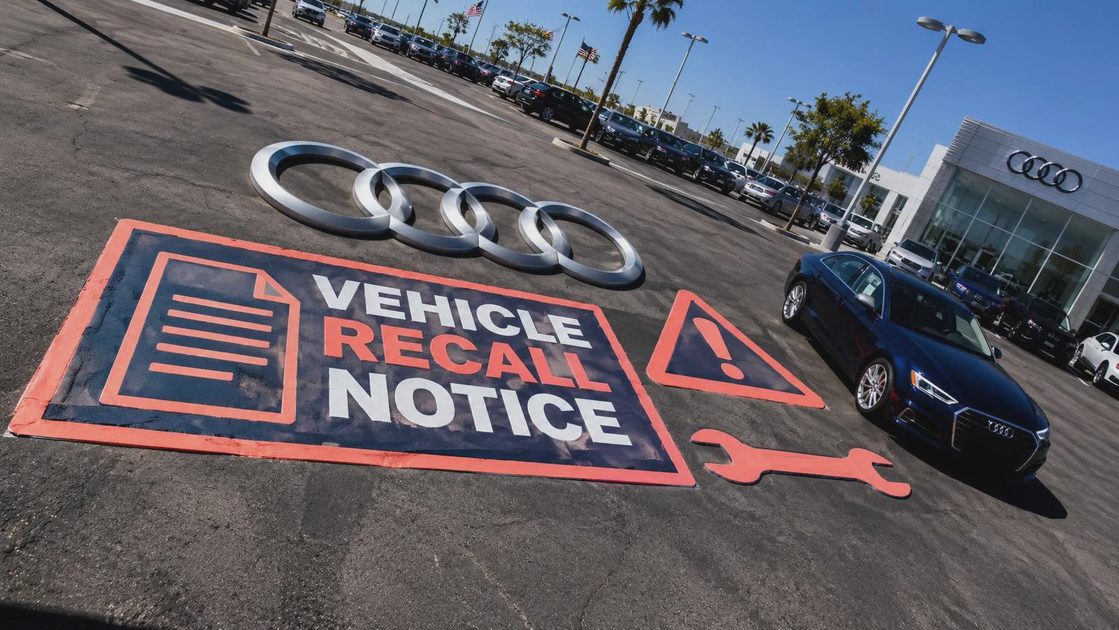
What to do when a recall is open
Read the defect description before driving to the dealership. Some notices tell owners to stop driving, park outdoors because of a fire risk, or avoid charging a vehicle until a repair is available. Others permit normal driving but recommend scheduling service promptly. Follow the actual notice, not a social-media summary or a forum comment from someone with a different model year.
Call an authorized Audi dealer and provide the VIN and campaign number. Ask four practical questions: Is the remedy available now? How long will the appointment take? Is a loaner or towing assistance available? Does the notice contain a stop-drive or stop-charge instruction? Get the answers in writing if the vehicle is unsafe to operate.
If the dealer says the recall is closed, request the repair order. The document should show the campaign code, date, mileage, and work performed. That record protects you during a later sale and helps distinguish a completed Audi recall from a repair that addressed an unrelated failure. If a dealer cannot locate the campaign, contact Audi customer service and provide the VIN rather than arguing from a headline.
Does an Audi recall affect insurance?
A recall itself usually does not raise an auto insurance premium. Insurance pricing is driven by factors such as location, driving record, claims history, vehicle characteristics, coverage limits, and deductible. A manufacturer’s safety campaign is not the same thing as an at-fault collision or a comprehensive claim.
Coverage becomes more complicated when an unrepaired defect contributes to a crash. Collision coverage can pay for damage to your vehicle after a covered accident, subject to the policy deductible. Liability coverage addresses damage or injuries you cause to others. Comprehensive coverage typically handles non-collision events such as theft, hail, or fire, but policy language and causation still matter. A recall is not a substitute for insurance, and insurance is not a replacement for the recall remedy.
Suppose an electrical defect is the subject of an open Audi recall and the vehicle later burns while parked. The owner should report the loss promptly, preserve photographs and service records, and avoid guessing about responsibility. The insurer will investigate coverage and damages; the automaker or supplier may separately examine the alleged defect. Do not discard the vehicle or authorize major teardown before the relevant parties have had a reasonable chance to inspect it.
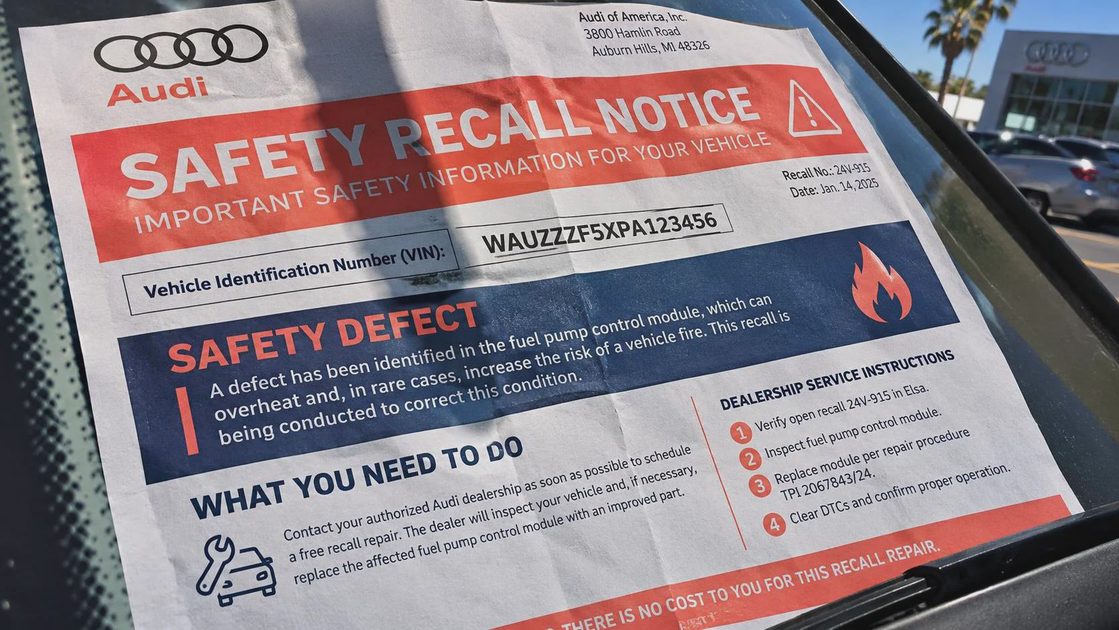
What recall notices can tell you about Audi
The useful signal is usually in the engineering language, not the headline. Read the affected production dates, failure mode, consequence, and remedy. “Loss of propulsion” points to a different risk profile than a missing label. “Increased crash risk” is more consequential than a cosmetic trim issue, even if both appear in the same database.
Repeated campaigns involving a common module, battery connector, camera, or supplier can reveal the pressure points of a platform. That does not automatically mean every Audi using the component is defective. It does mean buyers and owners should track campaign history by VIN, not rely on broad claims about an entire badge. Reading between the lines of the press release is part of the job, but the filing remains the evidence.
For electric Audi models, pay close attention to charging instructions, battery temperature language, and software remedy details. A software update may be the complete fix, while a component inspection may identify a smaller group requiring parts. Range complaints, charging interruptions, and a formal safety recall can overlap without being the same issue.
A practical owner checklist
Check the VIN through NHTSA and Audi, then record the campaign number and date of the search. Read whether the notice says to stop driving, stop charging, park outside, or simply arrange service. Call a dealer before making the trip, because a campaign may be announced before replacement parts reach every service department.
Bring the registration, warranty information, and any warning messages or photographs. Ask for a repair-order copy when the work is complete. If the vehicle has already suffered a failure related to the campaign, retain tow bills, invoices, diagnostic reports, and photographs. Those documents can matter in an insurance claim, warranty discussion, or later dispute.
Finally, review your auto policy separately. Confirm that liability limits are adequate, collision and comprehensive coverage fit the vehicle’s value, and deductibles are affordable. Comparing quotes from companies such as State Farm, GEICO, Progressive, or regional carriers can uncover meaningful differences, but the cheapest premium is not automatically the strongest protection after a serious loss.
The bottom line on an Audi recall is straightforward: identify the vehicle by VIN, follow the safety instructions, secure the repair record, and keep insurance questions separate from the manufacturer’s remedy. That approach cuts through the noise and gets the Audi back on the road with fewer unanswered questions.



Travellers Write
No letters yet — be the first traveller to write.