A vehicle identification number is the automotive equivalent of a fingerprint. It identifies a specific car, truck, or SUV through manufacturing details, ownership paperwork, recall records, and insurance files. For buyers, the number is a quick way to test whether a seller’s story matches the vehicle in front of you. For owners, it helps connect a policy, title, service record, and recall notice to the correct machine.
The number matters because used-car transactions are full of details that can be edited, misunderstood, or simply omitted. A clean-looking crossover can still have a salvage title. A low-mileage pickup can have an accident history that never appears in a seller’s description. A vehicle identification number will not answer every question, but it gives you the reference point needed to ask better ones.
Where to Find the Number
On most modern vehicles, the vehicle identification number appears on a small plate at the lower edge of the driver’s-side windshield. Stand outside the car and look through the glass near the dashboard. It is usually visible without opening the hood or entering the cabin. The same sequence is commonly printed on a label inside the driver’s doorjamb, often near the tire-pressure information.
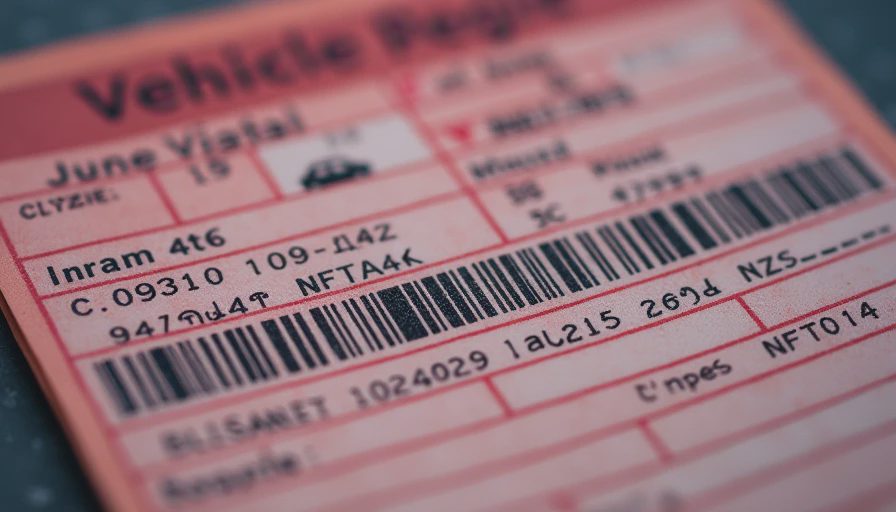
You may also find it on the title, registration card, insurance documents, financing paperwork, and maintenance records. Older vehicles can have additional locations, including the engine compartment, frame, firewall, or a stamped section of the chassis. Exact placement depends on the manufacturer and model year.
Match the characters carefully. A single wrong digit can send you to the history of an entirely different vehicle. Take a clear photograph, then compare it against the title and registration before requesting a quote or paying a deposit. If the number on the dashboard does not match the paperwork, stop the transaction until the discrepancy is explained and documented.
How the 17 Characters Work
Most vehicles built for the U.S. market since the 1980 model year use a 17-character vehicle identification number. It is not a random string. The first section identifies the manufacturer and vehicle origin. The middle characters describe the vehicle’s attributes, such as body style, engine, restraint system, or model series. Later characters identify the model year, assembly plant, and the vehicle’s production sequence.
The exact coding varies by manufacturer, so a decoder is useful. NHTSA’s VIN decoder can translate many basic details, including make, model, model year, and manufacturing information. The tenth character commonly represents model year, although the system repeats over time, which is why the entire sequence matters. Letters I, O, and Q are generally excluded to reduce confusion with the numbers one and zero.
A decoder is not a complete vehicle history report. It will not automatically reveal every collision, flood loss, odometer issue, or repair. Treat it as a verification tool, not a mechanical inspection. The number tells you what vehicle the documents describe; a qualified technician still needs to determine what condition that vehicle is actually in.
Using It Before Buying a Used Car
Enter the vehicle identification number into a reputable history-report service before handing over money. Compare the report’s recorded mileage, title status, registration states, auction entries, and reported damage with the seller’s claims. A sudden mileage drop, a salvage or rebuilt title, or a long period with no records deserves a direct explanation.
Recall research is another essential step. NHTSA’s recall lookup can show whether a safety recall is associated with a vehicle and whether the repair has been completed. Open recalls are not automatically a reason to reject a car, but they should be part of the purchase conversation. Some repairs are free through the manufacturer’s dealer network, while others can involve extended waiting periods when parts are constrained.
History data has limits. Not every repair is reported, and a clean report does not guarantee a clean car. Arrange an independent inspection, preferably at a shop that has no relationship with the seller. Ask for a lift inspection, scan-tool check, cold start, brake measurement, and confirmation that the number on the vehicle matches the records. That $150 to $250 inspection can expose problems costing thousands.
Why Insurers Ask for It
An insurer uses the vehicle identification number to identify the exact vehicle being added to a policy. It helps distinguish trims, engine choices, model years, body configurations, and safety equipment that can affect replacement cost and underwriting. A 2021 Ford F-150 with one engine and cab configuration is not necessarily priced like another F-150 from the same year.
When you request an auto insurance quote, provide the correct number rather than guessing from a year, make, and model. An incorrect entry could produce an inaccurate quote or require corrections before a claim. The number also helps an insurer connect the policy to registration records and verify details after a collision or theft.
It does not determine your premium by itself. Insurers typically consider driving history, location, age, coverage selections, deductibles, annual mileage, credit-based insurance information where permitted, and the vehicle’s claims risk. Comprehensive and collision coverage are also priced around the car’s value and repair exposure. A vehicle identification number supplies the vehicle facts; it is one input in a much larger underwriting decision.
Before buying coverage, compare liability limits as well as price. A low premium with minimum liability limits can leave a driver exposed after a serious crash. For a financed vehicle, the lender will usually require comprehensive and collision coverage, often with a deductible commonly ranging from $250 to $1,000.
A Simple Verification Routine
Start by photographing the number through the windshield and copying it exactly. Next, compare it with the title, registration, doorjamb label, and insurance application. Then run a recall search and obtain a history report from a recognized provider. Review title brands, mileage entries, damage records, theft indicators, and the number of previous states or owners.
After that, arrange an independent inspection and ask the shop to check for repaired structural damage, inconsistent paint, disconnected warning lights, and scan-tool codes. Finally, provide the confirmed number to at least three insurers. Progressive, GEICO, State Farm, Allstate, and regional carriers can differ in pricing because each weighs vehicle and driver risk differently. Comparing quotes with identical limits and deductibles creates a fairer test.
If a seller refuses to provide the number, says it is unavailable, or offers a sequence that does not match the car, walk away. Transparency is a basic requirement, not an optional extra.
The Bottom Line for Owners and Buyers
A vehicle identification number cannot replace a test drive, an inspection, or careful insurance shopping. It can, however, connect the facts that matter: what the vehicle is, where it came from, whether safety repairs remain open, and how an insurer will classify it.
Use the number before signing a purchase agreement, before adding a newly acquired car to a policy, and after a major title or ownership change. Keep a photo with your important vehicle documents, but avoid posting the complete sequence publicly. Here's what we know — and here's what we don't: this identifier is powerful for verification, but it is only as useful as the records and inspection supporting it.



Travellers Write
No letters yet — be the first traveller to write.