
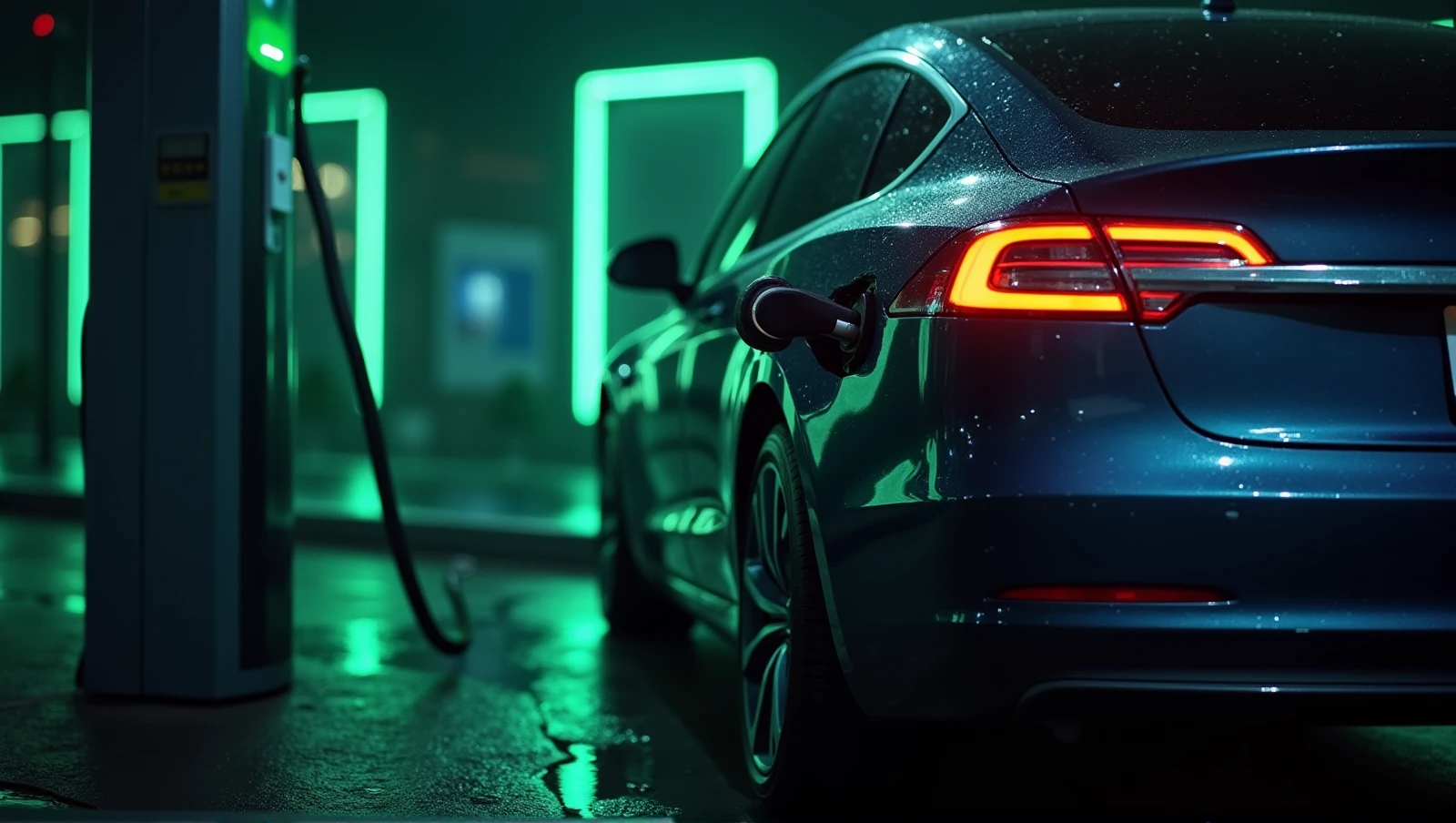
ProLogium Claims Solid-State Holy Grail With 5-Minute Charging and Zero Thermal Runaway
CES is usually a graveyard of concept tech that never sees asphalt. But ProLogium arrived in Las Vegas this week with something that demands attention. Marking its 20th anniversary, the battery specialist unveiled its "Superfluidized All-Inorganic Solid-State Lithium Ceramic Battery," and the spec sheet reads like a wish list from every EV chief engineer.
We've heard promises of solid-state salvation for years. Toyota, Nissan, and countless startups have teased similar breakthroughs. Yet, ProLogium's data suggests a leap rather than a step. The company claims its proprietary platform surpasses the three mainstream solid-state approaches currently fighting for dominance, specifically citing electrochemical performance and manufacturability.
Volumetric energy density reaches up to 860 Wh/L
Recharges 60–80% capacity in just 4–6 minutes
Ionic conductivity hits 57 mS/cm at room temperature
No thermal runaway observed in ARC testing
Solving the Thermal Runaway Problem
Safety remains the elephant in the room for lithium-ion adoption. For a car that runs on a battery, having a combustible battery is a rough start. ProLogium argues its all-inorganic electrolyte changes the physics entirely. The material is non-flammable and refuses to release combustible gases, even under stress.
The standout claim here involves ARC testing. ProLogium states this is the first lithium electrochemical system globally to show no thermal runaway in these rigorous conditions. Instead of relying on complex cooling systems to manage heat, the electrolyte utilizes an Active Safety Mechanism. Under high-voltage or high-temperature conditions, it releases material that converts high-risk active components in the cathode and anode into a stable crystalline structure. It interrupts the thermal chain reaction at the root rather than managing the symptoms.
This architecture also removes the need for high external pressure to maintain performance. Current solid-state contenders often require heavy clamping mechanisms to keep the electrolyte contact stable, adding weight and cost. By eliminating that requirement, ProLogium simplifies pack design. That weight savings translates directly to real-world energy density, preserving the 860 Wh/L figure in the actual vehicle, not just on a lab bench.
From Sedans to Humanoid Robots
While passenger EVs get the headlines, ProLogium is casting a wider net. The scalability of the ceramic separator and all-silicon anode design allows the technology to slip into diverse applications. At CES, the company showcased modules destined for electric construction machinery and e-bikes, sectors where safety and density are equally critical but often overlooked.
The expansion goes further into emerging tech. Humanoid robots and AI data centers require power management systems that can handle high loads without the risk of fire. ProLogium's Energy Storage Systems (ESS) aim to secure the power backbone for AI infrastructure, where downtime is not an option. They are also targeting aircraft, eVTOL, and marine applications, proving the platform's flexibility across transport modes.
Manufacturing scale remains the final hurdle for any battery breakthrough. ProLogium is advancing its France mass-production base to meet this demand. The process avoids rare elements, offering a path to recyclability and sustainability that current liquid electrolyte systems struggle to match. With ionic conductivity hitting 57 mS/cm at room temperature—approximately five times that of conventional liquid electrolytes and sulfide solid-state electrolytes like LGPS—the low-temperature performance should finally alleviate range anxiety in colder climates.
If the production units match the lab results, the implications for charging infrastructure are massive. Recharging 60–80% in 4–6 minutes puts solid-state batteries on par with liquid fuel stops. It's a bold claim for 2026, but if ProLogium can deliver on the France line, the EV landscape might shift faster than anticipated.