
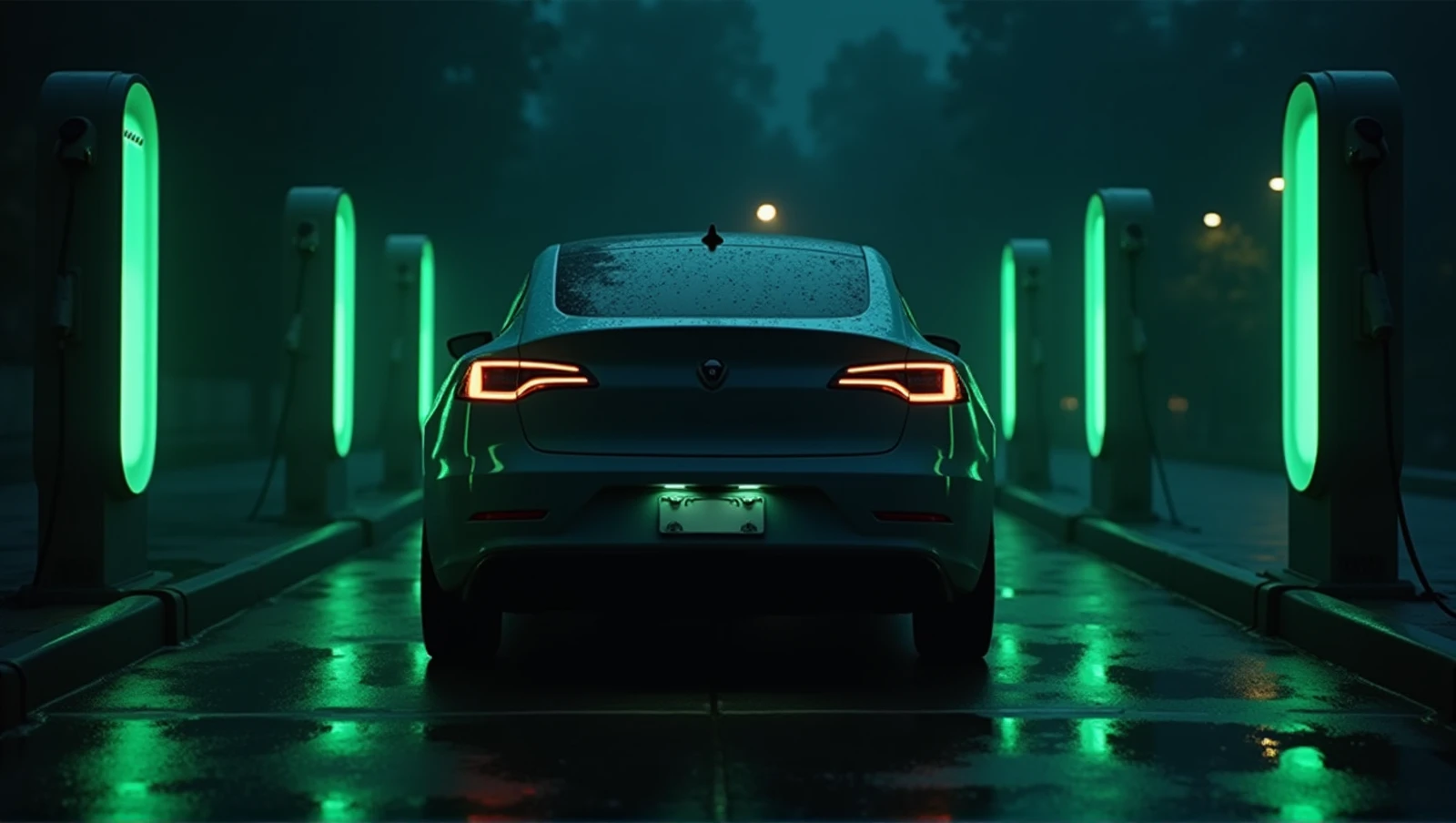
EV Adoption Plateaued in 2025, But Charging Infrastructure Just Exploded Anyway
While electric vehicle sales hit a speed bump in 2025, the plugs themselves are multiplying faster than ever. According to the latest data from Telemetry Transportation, public charging infrastructure expanded at a prodigious rate last year, defying both market cooling and political headwinds. The Alternative Fuels Data Center from the U.S. Department of Energy confirms that 3,656 new public DC fast charging stations opened across the U.S. in 2025, bringing over 17,500 new charge ports online.
That represents a 28% increase in charge ports compared to 2024, spread across 12% more locations. It marks the best year to date for infrastructure deployment, even as EV adoption rates stagnated. The momentum hasn't slowed down with the calendar turn, either. In just the first three weeks of 2026, an additional 146 locations have opened with another 710 charge ports.
Building Through the Noise
This expansion is particularly notable given the regulatory climate. Despite efforts by the Trump administration to stop payments from the National Electric Vehicle Infrastructure (NEVI) program, the build-out continued unabated. It suggests that private investment and state-level initiatives are now sturdy enough to withstand federal friction. For an industry that has spent the last decade begging for grid support, seeing infrastructure outpace adoption is a refreshing reversal of fortune.
However, raw numbers only tell half the story. The qualitative experience of charging is finally catching up to the quantitative stats. Early DC fast charging was often a exercise in patience and exposure to the elements, but newer networks are treating charging stops like destination experiences. Networks like Ionna are including canopies at many locations for weather protection, along with features like windshield washing stations, trash cans, and even break areas to grab a snack or drink.
This shift acknowledges a basic truth about road trips: people need comfort while they wait. EVGo and GM Energy are also expanding their highway network with Pilot Travel Centers, ensuring each location is a facility with these amenities already in place. For a car that runs on a battery, having a combustible battery is a rough start, but having to stand in the rain watching a progress bar is a close second. These upgrades remove the friction that kept mainstream buyers on the fence.
The Hardware Catching Up to the Plugs
Infrastructure is useless without affordable vehicles to plug into it. Despite the end of federal EV tax credits in the U.S. last September, the market is preparing a counteroffensive with lower cost hardware. The launch of more affordable EVs this year includes the new Nissan Leaf and the returning Chevrolet Bolt.
Additionally, new entrants like the Slate and Ford's upcoming $30,000 midsize pickup should combine with the expanding availability and improving reliability of public charging to entice more buyers. The $30,000 price point is critical. For years, the average transaction price for an EV hovered well above $50,000, locking out the volume buyers who rely most on public charging rather than home installations.
If the charging network continues to expand at 28% year-over-year while vehicle prices drop toward internal combustion equivalents, the adoption plateau of 2025 may look like a temporary pause rather than a ceiling. The plugs are waiting. Now the cars just need to show up.