The Real Horsepower Race Isn't Under the Hood, It's in the Patent Office
Forget torque curves and quarter-mile times. The auto industry's biggest battleground has moved underground, into the legal filings and server farms where the next generation of mobility is being coded. Vehicles are no longer just measured in terms of horsepower or speed. Modern cars are becoming more connected with the next-generation technologies of Artificial Intelligence (AI) and Advanced Driver Assistance Systems (ADAS), allowing them to take decisions in real-time in emergencies.
There are plenty of videos online where vehicle self-driving functions have overridden the driver to either save passengers or save pedestrians' lives. But behind those viral clips lies a fierce preoccupation with intellectual property (IP). The world auto industry is in the midst of a technology revolution fueled by two revolutionary trends: the shift from internal combustion vehicles (ICVs) to battery electric vehicles (BEVs) and the swift development of advanced driver-assistance systems (ADAS) and autonomous driving technologies.
Automakers, semiconductor companies, and software developers are patenting aggressively to safeguard their advantage and create competitive niches. This isn't just about protecting a new grille design anymore. It's about owning the logic that keeps the car on the road.
From Steel to Software
Current patent filing patterns show a drastic change from hardware focused patents to AI algorithms. Previous patent activity was around hardware components such as sensors, ECUs, and drivetrain mechanism. As cars become increasingly intelligent, we observe more patent filing around AI algorithms that increase the performance of existing hardware compared to creating new hardware itself.
Over the last 12 months alone, there has been a 30% increase in worldwide patent filings for ADAS, particularly in sensor fusion and AI-based decision-making. This shift indicates that the value isn't simply in the sensors, but in the extent to which the vehicle can understand and respond to the data they bring.
One of the best examples of this trend is Mobileye's patent for crowd-sourced HD mapping, which leverages artificial intelligence to filter and improve real-time data gathered from millions of cars. Rather than creating more costly sensors, they're creating more intelligent systems. Similarly, NVIDIA is patenting IP in edge computing, enabling vehicles to compute on-board instead of trusting the data to cloud infrastructure. Not only is it minimizing latency, but it is also a key consideration for safety and a strategic shift towards intelligence-based autonomy.
For a car that runs on a battery, having a combustible battery is a rough start, but managing that power is where the code comes in. Fun fact: Over 60% of BEV patents now include AI for battery lifecycle management. It's clear that the future of mobility is being written in code and protected by patents.
Tesla vs. BYD: The IP Clash
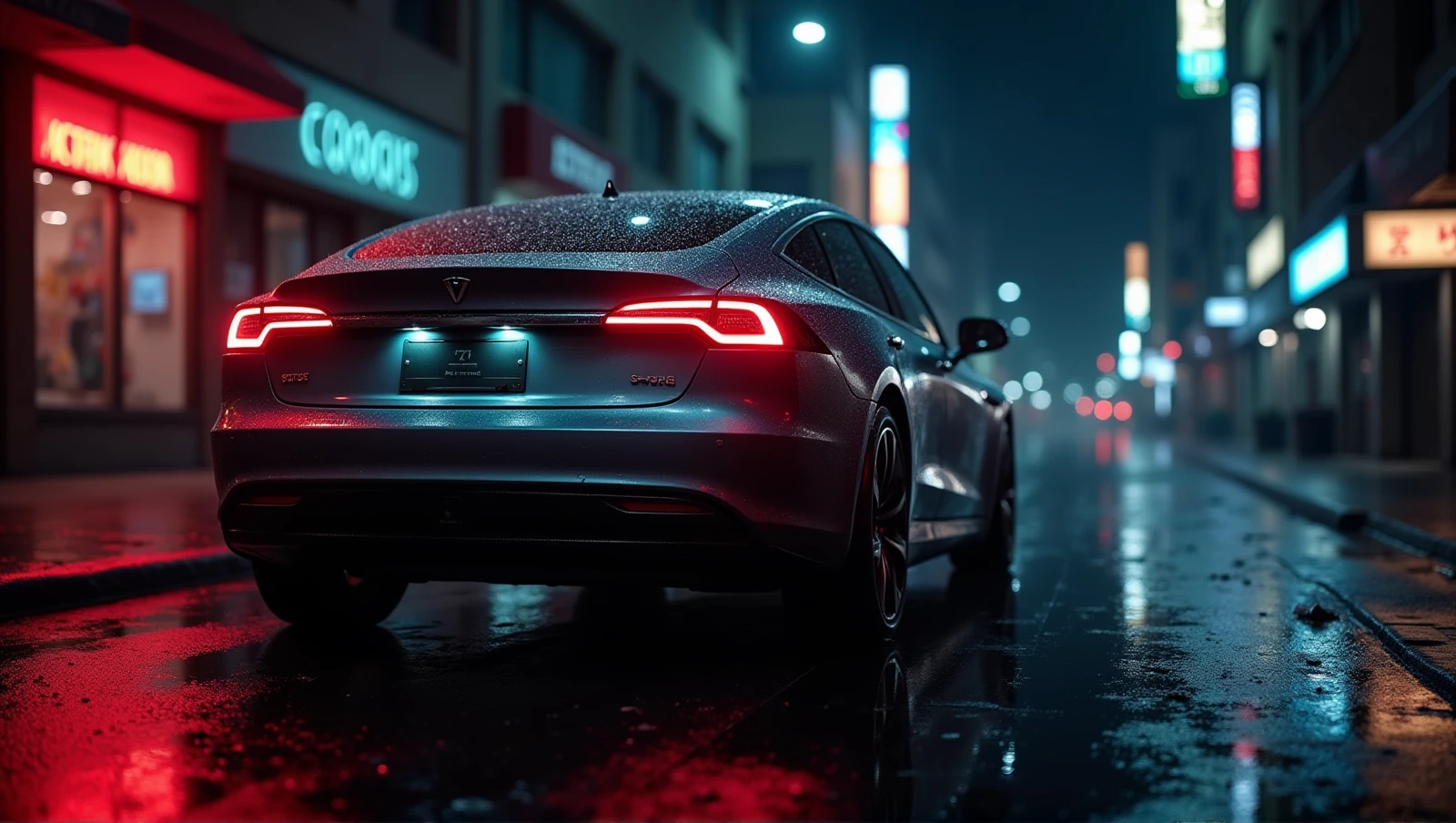
Two of the largest players, BYD and Tesla, are embroiled in a fierce battle over intellectual property (IP) that will likely determine the mobility future. Though Tesla has traditionally been viewed as the tech upstart, BYD's newfound success in international BEV sales and broad patent strategy indicate that it's no longer merely catching up.
Tesla Dojo is an application-specific AI supercomputer created by Tesla to speed up training deep neural networks for its self-driving technologies. The supercomputer is used to process enormous quantities of real-world driving data gathered from Tesla's worldwide fleet to enable quick advances in the firm's Full Self-Driving (FSD) and Autopilot systems. They are betting the farm on data processing power to solve autonomy.
While BYD differentiates with a vertically integrated approach, providing end-to-end control from battery chemistry to final car manufacturing. This contrast defines the current market stratification. Tesla wants to own the brain; BYD wants to own the entire body and nervous system.
This IP war matters because it dictates who sets the standards for safety and connectivity. If one company locks down essential patents for battery management or sensor fusion, they control the pricing and availability of these features for everyone else. We are watching the formation of tech oligopolies within the automotive space.
The shift from hardware-centric patents to AI algorithms suggests that the next decade of automotive innovation won't be found on the assembly line, but in the data center. As the industry pivots, the companies holding the keys to the code will hold the keys to the road.