The nhtsa hyundai fire risk story is not just another recall headline; it is a reminder that an electrical defect can turn a parked car into a garage problem, and that is the kind of thing owners notice fast. Hyundai has spent the last few years working through fire-related campaigns across several model lines, while NHTSA has kept the pressure on with investigations, recall reviews, and owner complaints. The fix is usually straightforward once parts are available, but the gap between defect and repair is where the risk lives. Here's what we know — and here's what we don't.
What the nhtsa hyundai fire risk covers
Not every Hyundai fire complaint points to the same defect, and that matters. In some campaigns, the issue has involved an ABS module or brake fluid intrusion that can create an electrical short. In others, the concern has been a wiring problem or another under-hood fault that can ignite after the engine is off. The nhtsa hyundai fire risk phrase gets used loosely online, but regulators care about the exact failure mode, the model years, and the VIN range. That is how a recall becomes a repair order instead of a rumor. If you see a notice, read the defect description, not just the headline. The details tell you whether the car needs a software update, a part swap, or a do-not-park-outside warning.

Why the fire issue gets treated as a parking problem
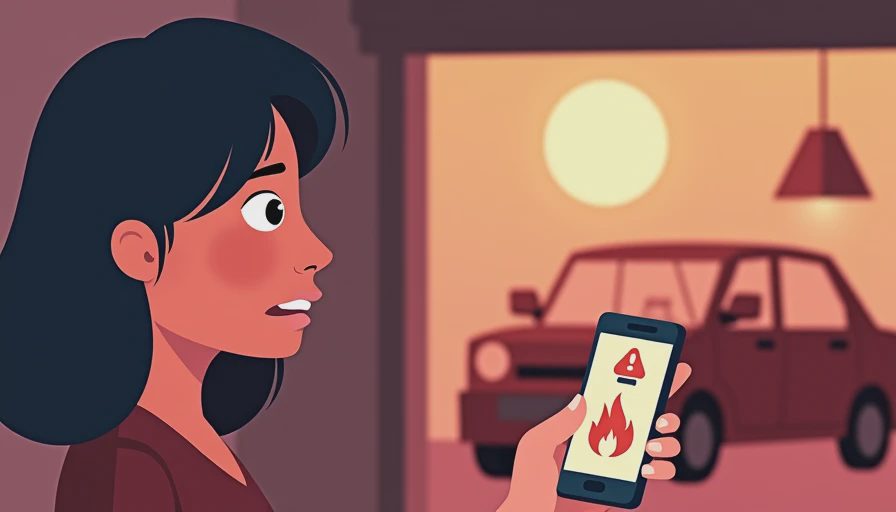
A fire that starts while the car is parked is a different kind of headache. There is no warning light in traffic, no shoulder to coast onto, and no easy way to manage heat once the ignition is off. That is why NHTSA and automakers get so blunt about parking instructions. A garage fire can take out the car, the tools, and whatever is stacked next to the lawn mower. A driveway fire is better, but not by much. The practical advice is simple: if the recall letter says park outside, do it. Do not assume the defect is harmless because the car still starts, the stereo still works, or the dash light went away after a reboot. Electrical faults do not care about optimism.
What owners should do before the dealer call back
Start with the VIN. Run it through the NHTSA recall lookup and Hyundai's own owner portal, then save screenshots or PDFs. If the vehicle is open, call the dealer and book the fix even if the service lane gives you the usual next-week shrug. Safety recalls are repaired at no charge, and that still holds if the car is outside warranty. If parts are not available, ask for the case number, the estimated arrival date, and whether the service department wants the car parked outside until the remedy is done. Keep receipts for towing, parking, and any temporary transportation. If the car shows smoke, burning smell, or repeated fuse failures, stop driving it and document the symptoms. A paper trail is boring until it is the only thing standing between you and a denied reimbursement claim.
What used-car shoppers and insurers care about
Used-car buyers should care because an open recall changes the calculus. A clean Carfax report is not the same thing as a repaired recall, and a lot of shoppers still confuse the two. If a dealer is selling a Hyundai with an open fire-related recall, ask for the repair order before you sign anything. On the insurance side, fire damage usually falls under comprehensive coverage, not liability. That means a parked car that burns can still be covered, minus the deductible. A $500 deductible on a $12,000 loss still matters, but it is better than eating the whole bill. If a driver has liability only, the loss can land squarely on the owner. That is the part of the nhtsa hyundai fire risk story that never makes the showroom brochure.
For fleets and dealers, the difference shows up in floorplan risk too. A burned unit can stall a sale, force disclosure, and tie up a repair bay while an adjuster and a manufacturer sort out whose defect triggered the mess.
How Hyundai's recall playbook usually works
Hyundai's response usually has two tracks: an interim warning and a permanent fix. The warning tells owners whether to park outside, reduce charging, or avoid certain conditions. The fix comes later, once dealers have the part or software package needed to close the recall. That is normal, if annoying. What owners should not do is treat the interim advice like background noise. If the letter says use the parking brake, keep the car away from structures, or wait for dealer instructions before driving, that language is there for a reason. It is also worth calling the dealer back every week or two if parts are delayed. Keep the repair order number, because reimbursement requests and loaner discussions tend to move faster when the paperwork already exists.
Here's what we know — and here's what we don't
Here is the clean read: the nhtsa hyundai fire risk is serious enough that owners should act on it, but it is not a mystery if you handle it the old-fashioned way. Check the VIN, save the recall letter, park outside if instructed, and get the repair done as soon as the dealer can book it. What we do not know, until you check the exact VIN, is whether your car is in the affected group or already cleared by a prior fix. There is nothing glamorous about a recall campaign, but that is the point. Safety work is supposed to be boring. If your VIN comes back open, treat it like a to-do item, not a souvenir.

Travellers Write
No letters yet — be the first traveller to write.