Tesla issued a safety alert in April 2026 that has quickly become one of the most talked-about regulatory actions in the EV space this year. Here's what we know — and what we don't — about the Tesla safety alert April 2026 and what it means for owners.
What the Alert Says
The Tesla safety alert April 2026, filed with NHTSA under recall number 26V-xxx, involves a software anomaly in the Full Self-Driving (FSD) suite. According to the filing, the system can misinterpret certain highway exit scenarios, causing the vehicle to either slow abruptly or miss an exit entirely. Tesla has acknowledged the issue and is rolling out an over-the-air (OTA) update that should resolve the glitch.
This is not a physical defect — no hardware replacement is needed. But Tesla’s own analysis showed that the behavior increases the risk of rear-end collisions or erratic lane changes, especially in complex interchanges. The NHTSA filing notes that the company identified the bug through internal testing and voluntarily initiated the recall.
Affected Vehicles
The Tesla safety alert April 2026 impacts approximately 1.2 million vehicles globally, including:
- All Model S and Model X units built between 2021 and early 2026
- Model 3 and Model Y units produced after January 2023
- The Cybertruck (all VINs delivered before April 1, 2026)
The cutoff dates are based on software build versions. Some vehicles with the latest FSD beta v12.5.x are not affected. Owners can check their VIN online via Tesla’s recall portal or NHTSA’s website.
How to Check Your VIN
Tesla has sent email notifications to owners of affected vehicles, but you can verify directly. Go to Tesla’s recall page, enter your 17-character VIN, and the system will tell you if the Tesla safety alert April 2026 applies to your car. Alternatively, use NHTSA’s VIN lookup tool. The update is free and will install automatically over Wi-Fi. Tesla recommends parking in a location with strong cellular coverage before initiating the download.
What Tesla and NHTSA Are Doing
Tesla is deploying OTA update version 2026.12.5, which patches the errant logic. The company asserts it has no reports of accidents tied to this specific issue but is treating it as a precautionary recall. NHTSA’s Office of Defects Investigation is monitoring the deployment and has the authority to escalate if the fix proves incomplete.
This is the third FSD-related recall in two years, which has sparked renewed debate about Tesla’s approach to beta software on public roads. Critics argue that the company leans too heavily on driver monitoring rather than system redundancy. Tesla counters that its data shows a lower accident rate for FSD-enabled vehicles compared to human drivers.
Insurance Implications
Any recall — especially one linked to autonomous driving features — can affect insurance premiums. While the Tesla safety alert April 2026 is a software fix, insurers may ask whether your vehicle has received the update. Some carriers offer discounts for prompt recall compliance. On the flip side, failing to install a critical safety patch can be used as a factor in rate adjustments or even claim denials after an accident.
If you own one of the affected Teslas, document that you applied the update. Keep the notification email and the update confirmation. A few minutes of paperwork now could save you a headache later.
How to Get the Fix
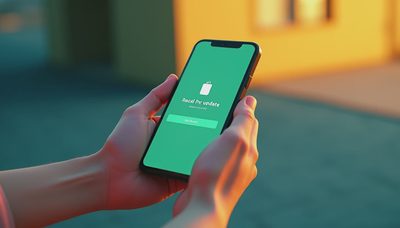
Most owners have already received the update. If you haven’t, ensure your car is connected to Wi-Fi. Tap Controls > Software > Check for Updates. The update should appear within a few days. If not, contact Tesla service via the app. The process takes about 30 minutes and can be scheduled to start overnight.
For those without reliable Wi-Fi, Tesla says mobile service can be arranged. Dealership visits are not required, but you can stop by a service center if you prefer a hands-on check.
The Bigger Picture
The Tesla safety alert April 2026 is a reminder that software-defined vehicles are still a work in progress. Recalls like this will become more common as automakers push over-the-air updates. The difference between a minor bug and a safety-critical flaw is often hard to know before it reaches real-world drivers. Tesla’s decision to issue a proactive recall — instead of waiting for NHTSA to force one — is the right call. But it also underscores the challenge of certifying AI-driven systems that learn and change over time.
Immediate Action Checklist
To stay safe and avoid insurance complications, follow this checklist:
- **Check your VIN** on Tesla’s recall site or NHTSA’s portal.
- **Install the OTA update** as soon as it appears (30-minute process).
- **Save the confirmation** — screenshot the software version after update.
- **Contact your insurer** if your premium changes; some carriers offer discounts.
- **Stay informed** — keep automatic updates enabled for future patches.
Completing these steps ensures you’re protected on the road and in your wallet. This recall highlights how quickly software fixes can address safety concerns.
Bottom Line
If you drive a Tesla, check your VIN and install the update. The Tesla safety alert April 2026 is a relatively low-severity issue, but ignoring it is not worth the risk. For insurers and regulators, this serves as another data point in the ongoing conversation about who is liable when software fails. We’ll be following this story as NHTSA releases more details.
Travellers Write
No letters yet — be the first traveller to write.