Car seat laws are written by states, not by automakers or one national rulebook. That creates a familiar problem for families crossing state lines: a restraint that is legal at home might not meet the requirements in another state. The practical answer is to understand your state's statute, then use the stronger safety recommendation when the law sets only a minimum.
The National Highway Traffic Safety Administration says children should ride rear-facing as long as possible within the limits of their seat, then move to a forward-facing harness and later a booster. The American Academy of Pediatrics follows the same general progression. Those recommendations are not identical to every state law, and that gap matters when a police officer, insurer, or crash investigator reviews what happened.
How car seat laws divide responsibility
Most car seat laws address three stages. Rear-facing seats support infants and young toddlers, distributing crash forces across the back and head. Forward-facing seats use a harness and tether to control movement. Booster seats position a vehicle's lap-and-shoulder belt across a larger child's hips, chest, and shoulder.
States typically use a mix of age, height, weight, and seating position. Some specify that a child under a certain age must use a child restraint. Others add a booster requirement until a child reaches a height threshold, often 4 feet 9 inches. Several states also restrict placing young children in the front seat when a rear seat is available.
Do not treat an age cutoff as a signal that a child is ready for the next stage. A five-year-old can satisfy a statute and still be too small for an adult belt to fit correctly. The lap belt should sit low across the upper thighs, while the shoulder belt should cross the chest and shoulder without touching the neck. If it rides over the stomach or slips behind the back, the booster is still doing necessary work.
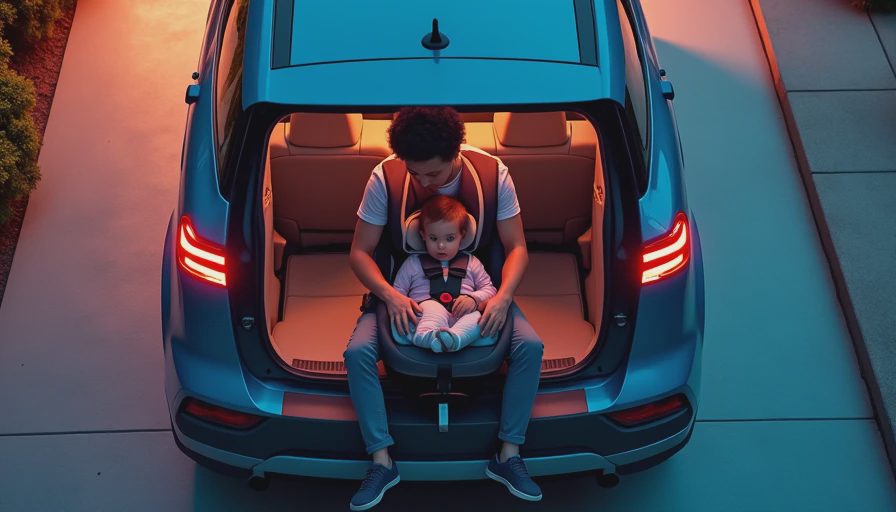
What to check before a long trip
Start with the law in the state where the trip begins, then review every state on the route. State transportation departments, highway safety offices, and legislative websites are better sources than an old social-media graphic. Search for the current child passenger safety statute, because amendments can change age thresholds and exemptions.
Next, read the seat's label and manual. A convertible seat might allow rear-facing use from 5 to 40 pounds and forward-facing use within a different range, while a combination seat may require a harness before becoming a booster. Those numbers are product-specific, not universal car seat laws. The vehicle owner's manual also matters because it identifies lower-anchor locations, tether points, and warnings about airbags.
Installation errors remain a bigger practical issue than most drivers expect. Use either the lower anchors or the seat belt unless the instructions specifically permit both. Tighten the harness until it passes the pinch test at the shoulder, attach the chest clip at armpit level, and use the top tether for forward-facing seats when the vehicle provides one. A seat should not move more than about an inch at the belt path after installation.
Rear-facing, forward-facing, and booster timing
A rear-facing seat is not automatically outgrown when a child's feet touch the vehicle seat. Check the manufacturer's height and weight limits, plus the required clearance above the head. When those limits are reached, a forward-facing harness is the next step. Keep using that harness until the child exceeds its limits or is mature enough to sit correctly in a booster for the entire ride.
Car seat laws often permit a move to a booster before a child is ready to cooperate with belt positioning. Real-world readiness means the child can sit upright without leaning, sliding, or placing the shoulder belt behind the back. A booster is generally appropriate only with a lap-and-shoulder belt; a lap-only belt does not provide the same upper-body protection.
Many children fit an adult belt properly between ages 8 and 12, but age alone is not the test. The child should sit with the back against the seat, knees bending naturally at the edge, feet on the floor, and the belt staying in position for the full trip. Test the fit in the vehicle that will actually be used, since seat geometry varies sharply between a compact sedan, a three-row crossover, and a pickup.

Common violations that cost more than a ticket
The most common mistakes are predictable. A driver uses a thick winter coat under the harness, leaves the tether disconnected, installs a rear-facing seat in front of an active airbag, or assumes the center position is always safest. Bulky clothing can create slack that disappears in a crash. Put the coat over the secured harness instead.
Another mistake is moving a child because of a birthday rather than a size limit. A child may turn two and remain rear-facing, or turn eight and still need a booster. The legal minimum is not a recommendation to graduate immediately. Parents also forget that a borrowed vehicle, rideshare, rental car, or grandparent's sedan may require a fresh installation check.
A citation can bring a fine, court costs, and sometimes points or required safety education, depending on the state. More importantly, improper restraint can affect injury outcomes and complicate an insurance claim. Liability coverage generally pays for damage or injuries a policyholder causes to others, while medical payments or personal injury protection depends on the policy and state. A seat violation does not automatically erase coverage, but it can become part of the factual record after a crash.
Car seats, recalls, and auto insurance
Car seat laws are only one part of the safety picture. Check the NHTSA recall database for the seat model, register the product with its manufacturer, and replace a seat after a moderate or severe crash if the manufacturer says it should be discarded. Do not rely on appearance; plastic and hardware can be damaged without an obvious mark.
Vehicle safety features also affect the daily risk calculation. Newer vehicles may offer rear-seat reminders, seat-belt alerts, advanced airbags, and stronger LATCH labeling, but no electronic system substitutes for a correctly installed restraint. When comparing insurance, ask for quotes with the same liability limits, collision and comprehensive deductibles, and listed drivers. A safer, newer vehicle can reduce some claims risk, while its repair costs and replacement value can push premiums higher.
Insurers such as State Farm, GEICO, Progressive, and Allstate price policies using factors including location, driving history, vehicle, coverage selections, and claims experience. They do not generally offer a blanket discount simply because a family owns a child seat. Still, bundling, low-mileage programs, defensive-driving courses, and telematics can change the quote. Comparing several carriers is usually more useful than assuming one safety feature decides the price.
A five-minute compliance check
Before leaving, confirm the child is in the restraint stage allowed by the seat manual and appropriate for the child's size. Confirm the harness is snug, the chest clip is level with the armpits, and the seat belt or anchors are routed exactly as shown. For forward-facing use, connect the top tether. Turn off a front passenger airbag when the vehicle and manual require it for a rear-facing seat.
Keep the current seat manual in the vehicle or save a PDF on your phone. Write down the seat model, expiration date, and recall-registration details. If installation remains uncertain, find a certified child passenger safety technician through a local health department, fire department, or Safe Kids program. A technician can identify belt-path and angle problems that are easy to miss in a driveway.
Here's what we know — and here's what we don't: car seat laws establish a legal floor, while child size, restraint fit, and manufacturer instructions determine the safer choice. Review the rules before every interstate trip, install the seat carefully, and compare auto insurance after your household's vehicles and drivers change. That combination prevents a roadside citation and does far more to protect the passenger who matters most.



Travellers Write
No letters yet — be the first traveller to write.