A Ford Bronco recall is not one single event with one fix. Ford has issued multiple safety campaigns covering different Bronco model years, components, and production batches, so the only reliable answer starts with the vehicle identification number, or VIN. Owners should check the official Ford recall portal and the National Highway Traffic Safety Administration database before assuming their SUV is clear. Here's what we know — and here's what we don't.
Why the Ford Bronco recall question is complicated
The modern Bronco returned for the 2021 model year with several configurations, including two-door and four-door bodies, different engines, manual and automatic transmissions, removable doors, and multiple roof designs. That variety matters because a recall can affect one build group without applying to every Bronco parked at a dealership.
A recall notice identifies a specific safety defect, the vehicles potentially involved, the risk created by the defect, and the remedy. It does not automatically mean every Bronco of the same model year has the problem. A vehicle might be included by VIN, while a nearly identical SUV built a few weeks later is not.
Some owners also confuse a recall with a technical service bulletin, or TSB. A TSB gives dealership technicians guidance for diagnosing or repairing a known issue; it is not necessarily a safety campaign and is not automatically a free repair. A Ford Bronco recall, by contrast, generally requires an authorized dealer to perform the remedy without charging the owner, subject to the campaign's terms.
How to check your Bronco by VIN
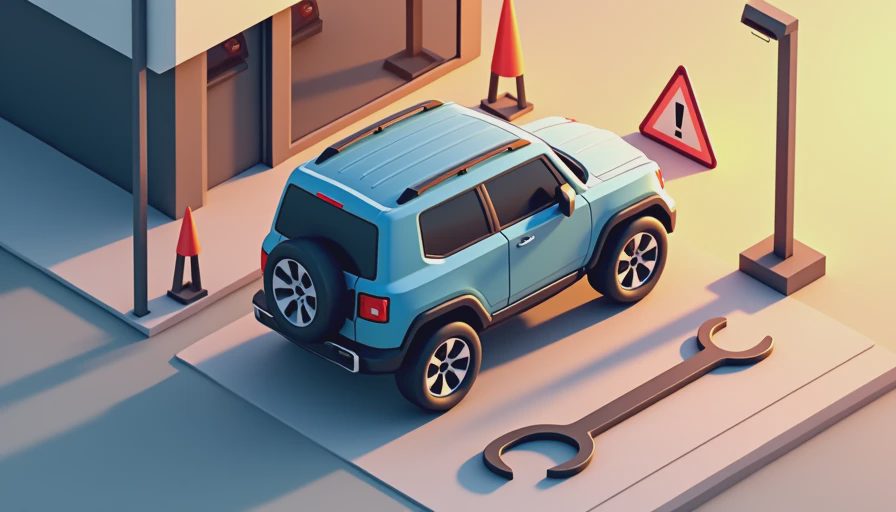
The fastest way to verify a Ford Bronco recall is to use the 17-character VIN, not just the model year or trim name. You can find the VIN on the driver-side dashboard near the windshield, on the driver's door-jamb label, and in registration or insurance documents. Enter it on Ford's recall website and on NHTSA's recall lookup tool for a second check.
Look for four details: whether the recall is open, the campaign number, the stated safety risk, and the repair status. An open recall means the remedy has not been recorded as completed. A closed campaign usually means the repair was performed, although a dealer may need to investigate if the work was done independently or before the database updated.
If the lookup returns no results, that does not prove the vehicle has never had a problem. It means no open safety recall is currently attached to that VIN in the database. A recent announcement can take time to appear, and a complaint or TSB will not always show as a recall. Save a screenshot of the result and ask a Ford service department to confirm the status before a long trip.
What a recall repair can involve
The remedy depends on the failed part. A dealer might inspect wiring, replace a fastener, update software, reprogram a control module, replace a sensor, or install a redesigned component. The work can take less than an hour or require the Bronco to remain at the dealership while parts arrive. The recall letter should explain the expected repair, but dealer capacity can still affect the appointment date.
Do not treat a software remedy as cosmetic. Modern Bronco systems connect braking, stability control, driver-assistance features, and powertrain controls through electronic modules. An update can correct how a warning appears, change a control strategy, or prevent a condition that could disable a safety feature. Ask the service adviser what warning signs should keep you from driving the vehicle before the appointment.
If the notice says to stop driving, follow that instruction. If it warns against parking indoors, take it seriously and keep the vehicle away from structures until the dealer provides guidance. Recall language can sound cautious because it is written for a broad population, but ignoring a clearly stated fire, brake, steering, or restraint warning is a poor risk calculation.

What owners should do before visiting the dealer
Start by calling with the VIN and recall number. Ask whether parts are in stock, whether the repair is completed by appointment, and how long the Bronco will remain in the shop. Photograph the odometer, dashboard warnings, and any relevant damage before handing over the keys. Those records are useful if the repair requires a follow-up visit.
Bring every active symptom to the service adviser, even if it seems unrelated. A warning light, intermittent camera failure, unusual brake behavior, or electronic message may help the technician separate a recall repair from a separate warranty or maintenance concern. Be precise about when the problem occurs: cold start, highway speed, heavy rain, off-road driving, or after charging a phone can all matter diagnostically.
After the repair, request a printed or digital work order showing the campaign number and completed remedy. Check that warning lights are gone and ask whether the dealer performed any additional work for which you would be charged. Recall repairs should not turn into an automatic sales pitch for unrelated filters, tires, or extended coverage.
Does a Ford Bronco recall affect insurance?
A recall normally does not cancel an auto policy or automatically raise a driver's premium. Insurers price coverage using factors such as driving history, location, vehicle characteristics, claims history, mileage, and selected limits. A manufacturer campaign is not the same thing as an at-fault accident or an insurance claim.
The practical insurance issue is damage caused by the defect. Liability coverage generally addresses injuries or property damage for which the insured driver is legally responsible, while collision coverage can apply to damage from a crash, subject to the deductible. Comprehensive coverage typically handles non-collision losses such as theft, vandalism, weather, and certain fire damage. Coverage depends on the policy and circumstances, so do not assume a recall makes every resulting loss payable.
If the Bronco is financed or leased, comprehensive and collision coverage are often required by the lender. Review the deductible before scheduling a repair, particularly if a dealer says a condition is not part of the recall. Comparing quotes from carriers such as State Farm, GEICO, Progressive, and Allstate can also reveal different deductible and rental-reimbursement options, but a lower premium is not useful if the policy leaves a major coverage gap.
Reading the notice without the PR spin
Recall notices can be dense, but three numbers explain what is happening: the model years affected, the estimated number of vehicles, and the remedy timeline. Read the defect description and risk statement first. Marketing language about capability or adventure belongs somewhere else; the safety notice is the document that matters when deciding whether to drive.
Search the campaign number in NHTSA's database to see the filing, owner complaints, manufacturer communications, and updates. Those records do not replace the VIN check, but they show whether the issue involves a narrow production run or a broader engineering problem. They can also reveal whether the remedy changed after dealers began performing repairs.
A used-car buyer should run the VIN before signing paperwork, then put the result in the purchase file. An open recall is not automatically a reason to walk away, but it is leverage to require completion before delivery. Get the promise in writing rather than relying on a salesperson's statement that the work is being handled later.
The bottom line for Bronco owners
The sensible response to a Ford Bronco recall is verification, not panic. Check the VIN through Ford and NHTSA, read the risk language, make the dealer confirm parts and timing, and keep documentation after the work is finished. If the notice restricts driving or parking, follow it until a qualified dealer provides a remedy.
The Ford Bronco remains a complex vehicle family, and a clean search today does not replace periodic checks. Set a calendar reminder around oil changes, registration renewals, or insurance reviews. A few minutes with the VIN can identify an open safety campaign before a dashboard warning, road trip, or resale transaction turns it into a much larger problem.
Travellers Write
No letters yet — be the first traveller to write.