Hyundai has issued a new safety recall affecting about 46,000 vehicles in the United States. The Hyundai recall 46000 vehicles stems from a potential electrical short inside the antilock braking system control module. In a worst-case scenario, that short could start a fire in the engine compartment, according to documents filed with the National Highway Traffic Safety Administration (NHTSA). Here is what owners should know — and what we are still waiting to learn.
What the Hyundai Recall 46000 Vehicles Covers
The recall population includes a range of 2023 and 2024 model-year Hyundai vehicles, though the initial report does not break down every nameplate and trim. What the filing does say is that the affected control modules were built within a specific production window stretching from late 2022 into early 2024. If you own a Hyundai from that period, it is worth checking whether your vehicle is on the list.
Hyundai plans to notify owners by first-class mail. The first letters are scheduled to go out next month. Once the letter arrives, you will have instructions for scheduling a free repair at a certified dealership. The fix is straightforward: a technician will inspect the ABS module for corrosion, and if the damage is found, replace the entire unit. There is no charge for the part, labor, or even a loaner if one is needed.
Why the ABS Module Can Overheat
The part at the center of this recall is the antilock braking system control module. That module sits near the brake lines and manages the pumping of brakes during a panic stop. When moisture gets into the circuit board, corrosion builds slowly over time. That corrosion can create an unintended electrical path, which may arc once the vehicle is running. The arc can melt the connector housing, and the heat can then spread to nearby fuel and brake components. That is why NHTSA recommends parking the vehicle outside until the repair is done, especially if you park in a garage attached to your house.
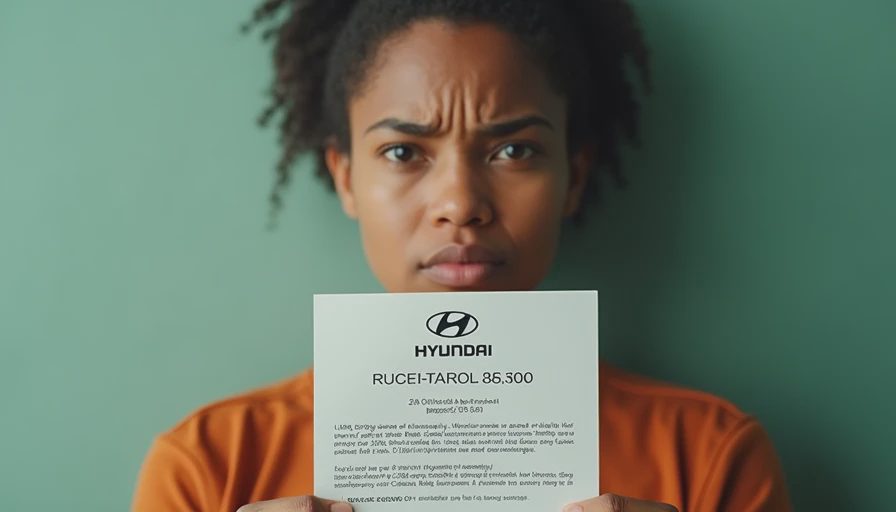
Three numbers explain the scope of this Hyundai recall: 46,000 vehicles, one faulty part, and a fire risk that does not vanish on its own. The failure is rare, but it is serious enough for the manufacturer to act before any widespread reports of fires or injuries. Hyundai has not released exact production dates for every affected vehicle, so owners should not assume they are in the clear based on the month they bought the car.
What Owners Should Do Right Now
Do not wait for the paper letter. You can check your vehicle identification number right now on the NHTSA recall website. If your VIN shows up as part of the Hyundai recall 46000 vehicles, call your local Hyundai dealer and schedule the repair. Many dealers have the replacement ABS modules in stock and can complete the job in under an hour. The database is updated the same day a recall is filed, so your VIN may already show up as incomplete or open.
If your VIN does not appear, check again in a few weeks. Automakers sometimes split large recalls into smaller batches as part supplies arrive. Hyundai may also issue a second filing to expand the population. The recall process is not always a single event.
How to Check Your VIN in Three Minutes
Open your browser and go to nhtsa.gov/recalls. Enter your 17-character VIN, which is found on the dashboard near the windshield or on your vehicle registration. Click “Check for Recalls.” The system will display any open safety campaigns, including this one. You can also call the NHTSA vehicle safety hotline at 888-327-4236. Have your VIN handy and a customer service representative will tell you over the phone.
Another route is to register your vehicle on Hyundai’s owner portal. The portal sends automatic recall alerts when a new action is opened on your VIN. That is useful even after the current repair is flagged, because it catches future campaigns from any manufacturer, not just Hyundai.

What About Other Hyundai Models?
This recall is specific to a narrow group of 2023-2024 model-year vehicles, not the entire lineup. Hyundai sells dozens of models in the United States, and most of them are not affected. The company has had a few smaller campaigns this year, but the Hyundai recall that makes news is the one tied to the ABS module. The pattern is familiar: a supplier part fails, the automaker files a report, and owners get a free fix.
The important thing to remember is that a recall is not a reflection of overall build quality. Even the most reliable brands issue recalls every year. What matters is how quickly the problem is found and fixed. Hyundai’s communication has been clear about the fire risk, and the repair itself is simple. That combination beats a recall that goes silent for months.
The Bottom Line on This Hyundai Recall
If your VIN is part of the Hyundai recall 46000 vehicles, schedule the repair within a week. The dealer visit is free, the fix takes under an hour, and the peace of mind is worth the trip. If your VIN is not included, keep checking the NHTSA site over the next month as additional batches are announced. In the meantime, follow the recall warning: do not park the car in the garage, and avoid long trips until you have confirmation that your vehicle is safe.
Here is what we know so far: the Hyundai recall covers roughly 46,000 vehicles, the repair is free, and the potential fire risk is real. We are still waiting for the full model breakdown and the exact production dates. We will update this page as soon as Hyundai releases more information.


Travellers Write
No letters yet — be the first traveller to write.