An open recall means a vehicle has been identified as needing a recall remedy, and the manufacturer's records do not show that the work has been completed. Check the vehicle identification number, or VIN, through the National Highway Traffic Safety Administration's recall lookup or the automaker's recall page, then contact a franchised dealer about the fix. Most safety recall repairs are free, but the urgency depends on the defect and any instructions in the notice.
An open recall is not proof that a component has failed. It means the manufacturer has identified a safety defect or a failure to comply with a federal safety standard in a population that includes your vehicle. Some vehicles need an inspection before a dealer can determine whether a part needs replacement. Others require a software update or a hardware repair regardless of whether the driver has noticed a problem.
Check the VIN, not just the model name
The VIN is the decisive starting point. Find the 17-character number on the dashboard at the base of the windshield, the driver's door jamb label, or the vehicle's registration. Enter it at NHTSA.gov/recalls and check the manufacturer's recall lookup as well. A broad announcement may cover only certain build dates, factories, equipment configurations, or production batches; a matching model and year alone do not establish that your particular vehicle is included.
Read the result beyond the headline. The listing should describe the safety risk and the remedy or its availability. Note the NHTSA recall number and the manufacturer's campaign number if provided. Dealers can use those identifiers to find the right service procedure, especially when a vehicle has more than one outstanding campaign.
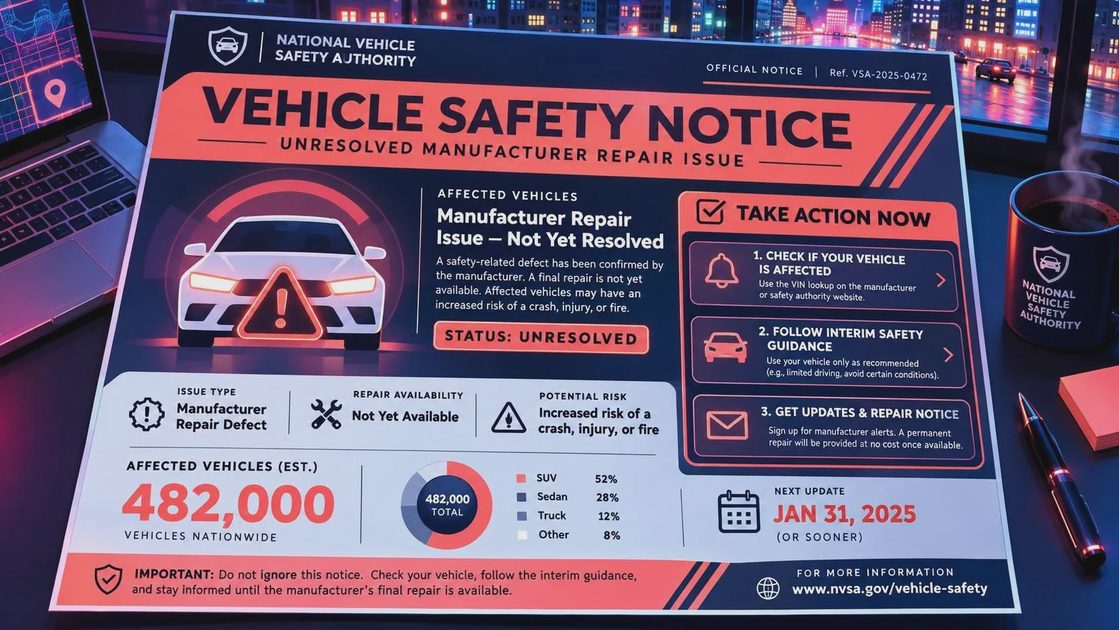
A clean search is useful, but it is not a lifetime warranty against recalls. Newly announced campaigns can take time to appear in VIN lookup tools, and recall status can change. If you have received an owner's letter but the lookup shows nothing, call the manufacturer or a franchised dealer with the VIN and the notice in hand.
NHTSA's lookup also has limitations, including certain older recalls and some categories of vehicles or equipment. The manufacturer's records may provide additional detail. Tires, child restraints, and other equipment can have their own recalls, so a vehicle VIN search is not a substitute for checking those items separately.
How urgent is an open recall?
Start with the notice's risk description and instructions. A recall can involve anything from a label that fails to meet a standard to a defect that raises the risk of a crash or fire. Those are not equivalent problems, and the campaign documents should not be treated as interchangeable.
If the manufacturer says not to drive the vehicle, follow that instruction and ask the dealer or manufacturer how to arrange the repair and any transportation. A park-outside warning means exactly that: follow the stated parking and charging instructions until the remedy is completed. If a warning limits use of a feature or advises against carrying passengers in a particular seat, don't improvise an alternative based on an online forum.
No warning light is not an all-clear. A defect can exist without an obvious symptom, and a recall notice may address a failure that occurs only under particular conditions. Conversely, if you experience a symptom described in the campaign, tell the dealer when scheduling; do not assume the recall is the only possible cause.
Scheduling the repair and handling delays
For an open recall with an available remedy, contact a dealer for the vehicle's brand, provide the VIN and campaign number, and ask whether the required parts and procedure are available. An independent shop may identify the issue, but the manufacturer-directed recall repair is generally handled through its authorized dealer network.
Federal law generally requires manufacturers to remedy safety recalls without charge, subject to statutory limits and exceptions. Some older vehicles or unusual circumstances can complicate coverage, so ask the manufacturer directly if a dealer proposes a charge for the recall work. Routine maintenance or unrelated repairs identified during the visit are separate: request an estimate and authorize those only if you want them.
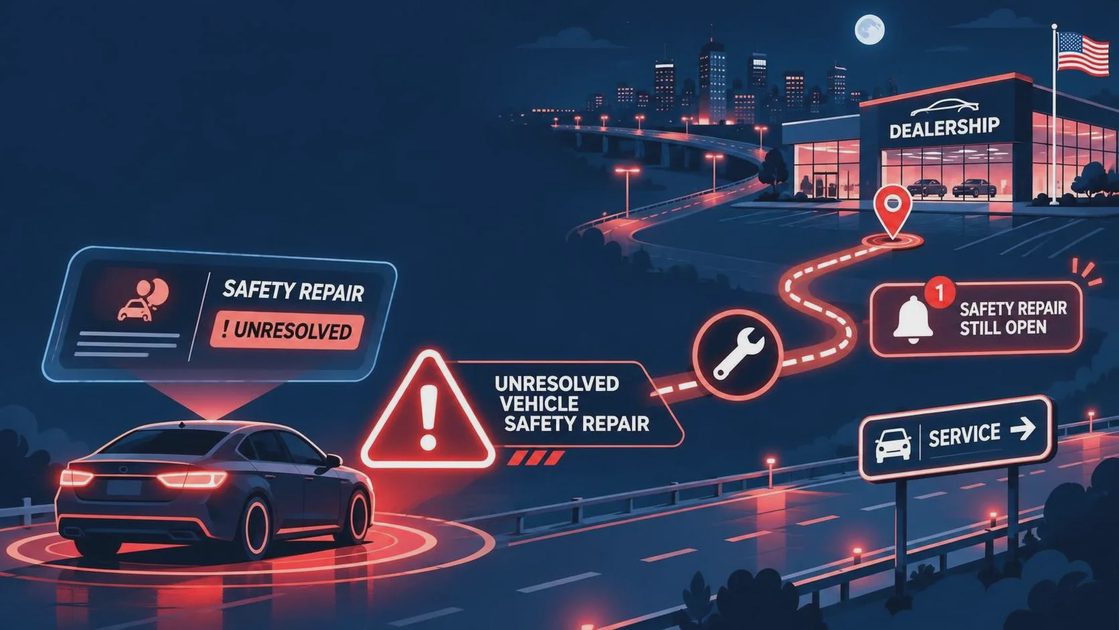
Sometimes an open recall has no final remedy yet. The manufacturer may send an initial notice explaining the risk and later send another when the repair is ready. Ask whether there is an interim repair, whether parts can be ordered, and what restrictions apply in the meantime. A loaner or rental is not automatic; ask the dealer or manufacturer what assistance is available for that specific campaign.
If the dealer cannot complete the work, document the date, campaign number, and explanation. Contact the manufacturer's customer service department for help locating another dealer or resolving a parts issue. If you believe the manufacturer or dealer is not providing the required remedy, you can also contact NHTSA or file a vehicle safety complaint through its website.
Buying, selling, or documenting a repaired vehicle
Check for an open recall before money changes hands, even if a seller supplies a vehicle-history report. Run the VIN yourself and ask for documentation of any completed campaign. If work remains, confirm whether a remedy is available and agree in writing who will arrange it. A dealer's used-car disclosure obligations vary by state and circumstance; don't assume every used vehicle offered for sale has been repaired.
After a recall visit, keep the repair order showing the VIN, campaign, date, and work performed. Database updates may not be immediate. If the recall still appears open after the dealer has reported the repair, contact the dealer and manufacturer with the paperwork rather than assuming the job was missed.
If you paid for a qualifying repair before the recall was announced, ask the manufacturer about reimbursement and retain the invoice and proof of payment. Eligibility depends on the campaign and applicable rules. Finally, keep your registration and manufacturer contact information up to date so future notices have a better chance of reaching you. A VIN check tells you what the records show today; the paperwork helps if those records need correcting tomorrow.
Travellers Write
No letters yet — be the first traveller to write.