
A car recall means a manufacturer or federal safety regulators have identified a defect or compliance issue that requires attention. To find out whether your vehicle is affected, enter its 17-character vehicle identification number, or VIN, at NHTSA.gov/recalls. If an open safety recall appears, contact an authorized dealer for the remedy. Most qualifying safety recall repairs are free, but parts and appointment availability can lag the announcement.
The key distinction: a headline about millions of vehicles does not establish that yours is included. A car recall can cover a specific production period, factory, component, or configuration within a model line. The VIN lookup is the better starting point, followed by the manufacturer's own recall page or customer-service line if the result is unclear.
Check the VIN, not just the model name
Find the VIN on the driver's side of the dashboard, visible through the windshield, or on the driver's doorjamb label. It is also typically on registration and insurance documents. Enter all 17 characters carefully; the letters I, O, and Q are not used in standard VINs.
NHTSA's lookup is designed to show open safety recalls for a specific vehicle. A completed campaign generally will not appear as an open recall, and a very recent announcement may take time to show up in every lookup system. If you received a notice but the search is blank, call the manufacturer with the VIN rather than assuming the notice was a mistake.
A model-wide search can help identify the broader car recall and its filing history, but it is less precise for an individual vehicle. Look for the NHTSA campaign number, the affected production dates, the defect description, and the proposed remedy. Those details can explain why two apparently identical vehicles do not have the same recall status.
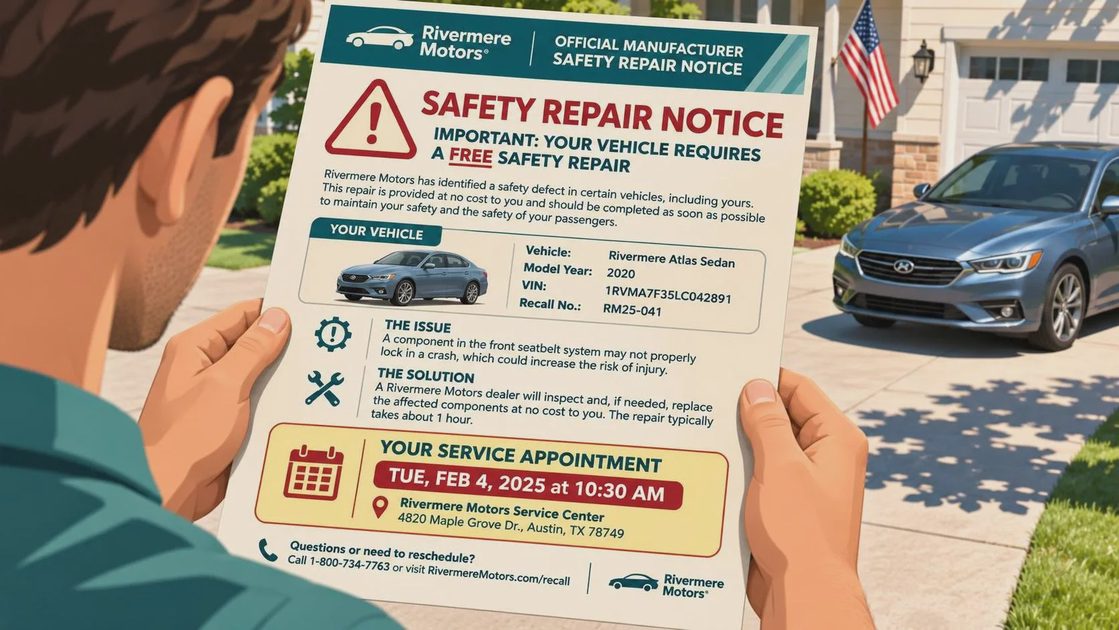
The number of potentially affected vehicles in a filing is not the number confirmed to contain the defect. Manufacturers often define a population broadly while they trace parts and production records. For dealer staff and supplier engineers, that distinction matters; for an owner, an included VIN is enough reason to arrange the remedy.
Read the notice for urgency and the actual remedy
A car recall notice should describe the safety risk, warning signs if any, and what the manufacturer plans to do. It may also give interim instructions. Read those instructions closely: some campaigns say to park outside, avoid charging, or stop driving until a repair is completed. Those are campaign-specific directions, not universal rules for recalled vehicles.
A recall without a stop-driving instruction is not necessarily harmless. Ask the dealer or manufacturer whether the vehicle can be driven to the appointment and what to do if the described symptoms appear. If the manufacturer says not to drive, do not drive it to the dealership; ask about towing or another transport arrangement.
The notice may announce a defect before a permanent fix is ready. In that case, owners can receive an initial notification and a later one when parts or a remedy become available. Ask the dealer to document your request, confirm how you will be contacted, and explain any temporary repair. A software update may be the remedy for some campaigns, but do not assume an over-the-air update completed it: verify the recall status afterward.
What a car recall repair should cost
For an eligible safety recall, the manufacturer generally provides the remedy at no charge through an authorized dealer. That can mean repair, replacement, or, in some circumstances, a refund. Eligibility rules include a vehicle-age limit for free remedies, and the details can vary by situation. If an older vehicle is involved, ask the manufacturer and NHTSA about the applicable rules before paying for the work.
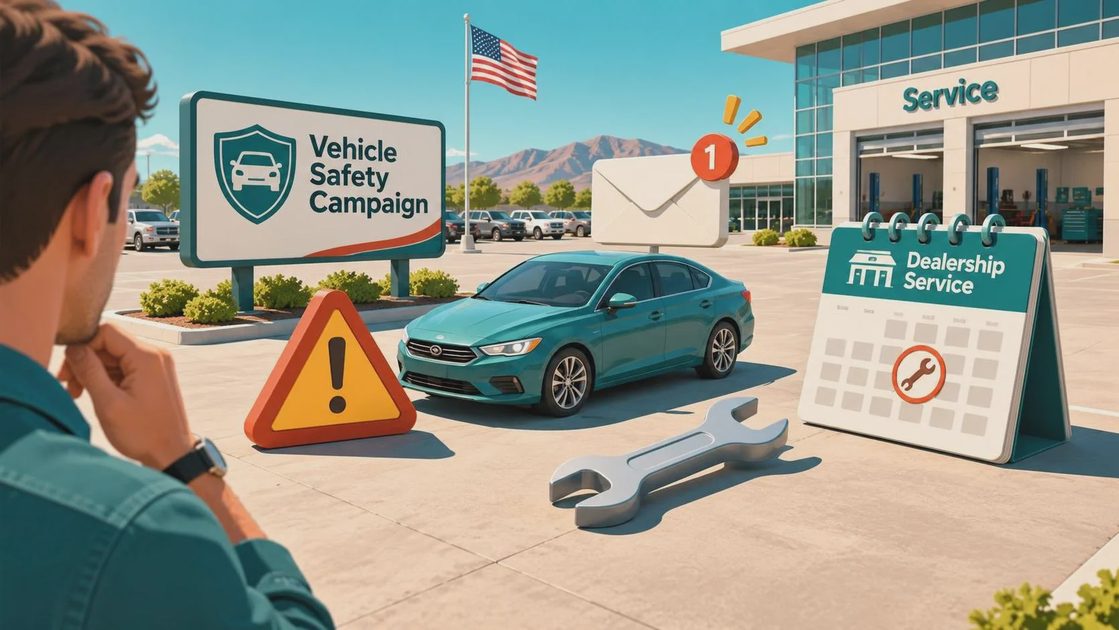
The recall fix is separate from unrelated maintenance. A dealer may recommend tires, brakes, or other services during the visit, but those are not automatically covered. Ask for a written estimate and decline unrelated work you do not authorize. If a dealer says the recall repair itself is billable, request an explanation tied to your VIN and contact the manufacturer before agreeing to the charge.
Already paid to fix the same defect? Keep the invoice and proof of payment. Recall notices include information about possible reimbursement for eligible prior repairs, including applicable conditions and deadlines. Reimbursement is not automatic, and an unrelated repair on the same system does not necessarily qualify.
If parts are unavailable or the dealer cannot help
Ask whether another authorized dealer has parts or an earlier appointment. Then contact the manufacturer's customer-service line with the VIN, recall number, dealer name, and dates of your calls. Request a case number. Loaners, rental vehicles, and towing are not guaranteed for every campaign, so get any offer and its conditions in writing.
If the delay leaves you without a safe way to use the vehicle, tell the manufacturer why. If the response is inadequate, file a complaint with NHTSA through its website or vehicle safety hotline. Include the recall number and a factual timeline. The agency can use complaints to monitor problems, although a complaint does not guarantee an individual repair date or reimbursement.
Recalls, service bulletins, and used-car checks
A car recall is not the same as a technical service bulletin. A TSB gives service departments diagnostic or repair guidance; it is not, by itself, a safety recall or a promise of free work. Warranty coverage, service campaigns, and recalls can overlap, so ask the dealer which program applies and whether the VIN is eligible.
Before buying a used vehicle, run its VIN through the federal lookup and ask the seller for repair records. A clean search is useful, but it is not a substitute for an inspection or proof that the vehicle was maintained. Dealers' obligations concerning unrepaired recalls can differ between new and used vehicles, so do not assume a used vehicle is recall-free because it is on a dealer lot.
After any car recall repair, retain the work order and check the VIN again after the records have had time to update. If the campaign remains open, call the dealer and ask whether completion was reported. The paperwork is your best starting point if the vehicle changes hands or the database entry needs correction.
Travellers Write
No letters yet — be the first traveller to write.